How Brighton Palace Pier points the way for Middle Eastern capital.
Middle Eastern investors are increasingly asking a crucial question: where should we allocate funds that are both resilient and strategically differentiated from traditional equities and bonds? In my view, the answer is obvious: in heritage assets. Particularly those that sit at the heart of major destinations and act as catalysts for wider economic activity.
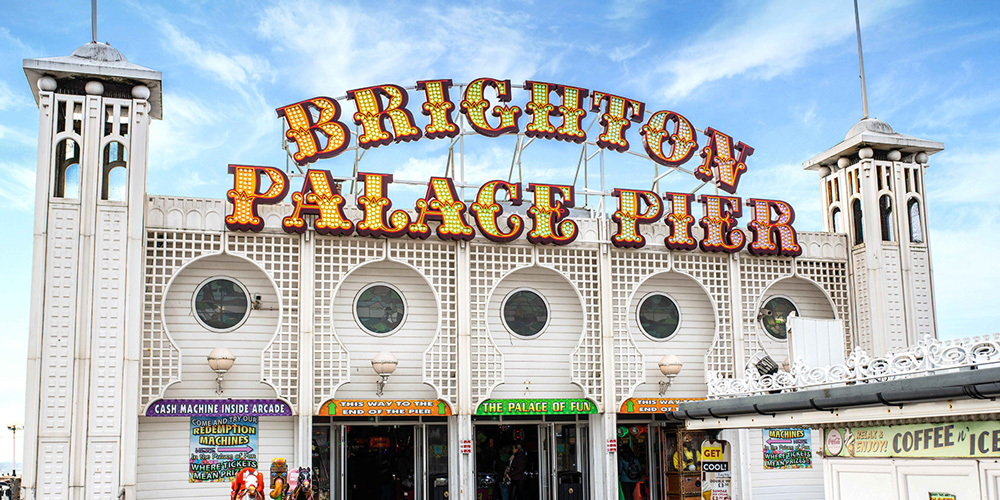
Nowhere is this more evident than in the iconic Brighton Palace Pier, the world-famous landmark we recently listed for sale. While I obviously have skin in this particular game, the sale opens up a broader discussion about the role heritage assets can play not only within diversified global portfolios, but in shaping the trajectory of entire cities. For sophisticated investors from the Middle East, this represents an opportunity to acquire more than a single attraction: it is a chance to invest in the beating heart of a destination and influence what follows.
Built in 1899 and welcoming nearly four million visitors in 2025, Brighton Palace Pier is more than a tourist attraction; it is the most recognisable symbol of the city itself. It defines first impressions, anchors the seafront economy and influences how Brighton is perceived globally. As we appointed Knight Frank to lead its sale, our objective was not merely to divest an asset, but to identify buyers who understand its broader strategic role – one where visible investment in the city’s most iconic site can generate momentum far beyond the pier’s footprint.
Strategically valuable for wider opportunities in the UK
Heritage landmarks such as Brighton Pier are inherently scarce. They are finite in number, deeply embedded in local identity and instantly recognisable worldwide. Unlike conventional commercial real estate, these assets cannot be replicated or relocated; each carries its own history, architectural DNA and emotional connection to place.
For Middle Eastern investors managing substantial portfolios through sovereign wealth funds, family offices and institutional capital, this scarcity offers more than long-term brand equity. It offers strategic positioning: ownership of an asset that naturally convenes visitors, businesses and civic leaders, and that often becomes a reference point for further investment decisions in the surrounding city.
Global demand for heritage tourism continues to rise. Recent market analyses suggest the sector could approach US$900 billion by 2033, driven by growing interest in cultural and experiential travel. Iconic assets play a central role in this growth. When they are well capitalised and thoughtfully evolved, they act as magnets: driving footfall, attracting partnerships and encouraging complementary investment across hotels, restaurants, retail, events and cultural infrastructure.
As Brighton Pier’s owners, we have been candid about the challenges of recent years, including rising operational costs and fluctuating visitor numbers. Yet with the right level of investment, the pier remains financially viable and profitable as a standalone business – and strategically valuable as a platform for wider opportunity.
From arcades and rides to food and beverage outlets, event spaces and film-location licensing, Brighton Pier benefits from multiple income streams. This diversification is precisely what long-term investors seek. Importantly, when owners are seen to reinvest in such an emblematic asset, it often sends a powerful signal to the market: reinforcing confidence in the destination and encouraging additional hospitality, leisure and real estate activity across the city.
Global demand for authentic, place-based experiences
The fundamentals of tourism in the UK remain robust. Cities such as Brighton & Hove consistently rank among the country’s most desirable destinations, attracting millions of overnight trips each year and generating substantial economic impact for local communities. Heritage assets sit at the centre of this ecosystem; anchoring visitor flows and shaping how cities evolve around them.
Whether it is seaside piers in England or desert oases such as AlUla in Saudi Arabia – where British heritage expertise is helping to deliver world-class cultural destinations – the global demand for authentic, place-based experiences is clear. For international investors, this underscores a durable truth: when iconic assets thrive, so too do the cities around them.
Heritage investment carries a unique dual mandate: commercial performance alongside custodianship. Ownership brings responsibility, to preserve, enhance and engage, but it also creates influence. Investors who visibly invest in landmark assets often become long-term stakeholders in the city itself, helping to shape its narrative, confidence and attractiveness to further capital.
In the UK, this approach is increasingly recognised. Public and private initiatives such as the Heritage Revival Fund, which is committing £46 million to restoring historic buildings, demonstrate how heritage investment can unlock economic value while strengthening civic identity.
Diversification and intergenerational holdings
For Middle Eastern investors traditionally weighted toward energy, infrastructure or prime real estate, heritage assets offer genuine diversification. Their performance is driven less by financial market cycles and more by tourism, culture and the long-term appeal of place.
These are not short-term trades. They are intergenerational holdings. Assets that reward vision, patience and thoughtful capital deployment, while offering the potential to catalyse opportunity well beyond the original investment.
The sale of Brighton Palace Pier represents a moment of reimagination. Not just for us as sellers, but for buyers ready to demonstrate what investment in an iconic asset can achieve. Ownership of such a landmark offers a rare platform: to enhance the asset itself, to signal confidence in a city world-renowned for its innovation and creativity, and to help unlock the next wave of opportunity across hospitality, culture and the built environment.
For Middle Eastern investors seeking resilient, differentiated and globally significant investments, British heritage assets deserve serious consideration. To invest in heritage is to invest in identity, experience and place. These are assets that do more than generate returns: they shape cities, attract opportunity and endure across generations.