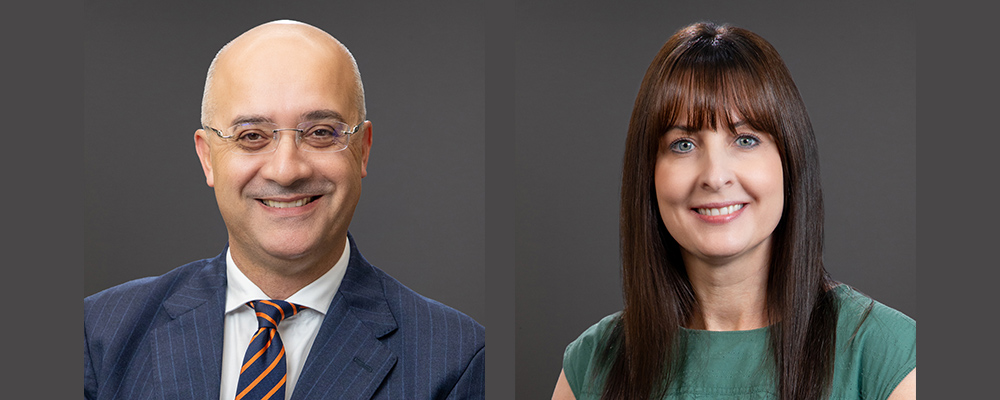
By: Mohammed Kawasmi, partner in Al Tamimi & Company’s real estate
Kirsty de Sousa is a senior knowledge lawyer in Al Tamimi & Company’s real estate
What you need to know about Corporate Property Ownership in Dubai.
Dubai’s property market runs on international capital, much of it invested through companies rather than individuals. Until now, the rules on how these companies may own property, and what happens when their shareholders change, have been spread across different sources and rely mainly on unwritten policy of the Dubai Land Department (DLD).
From our experience in dealing with the DLD we have summarised DLD policy to help investor companies understand the DLD policies. For developers, funds and foreign groups, this article answers three practical questions: who can own, what it costs when ownership changes, and how quickly the DLD must be told.
Foreign Companies: Set Up Locally First
The headline point for overseas investors is simple. A foreign company cannot hold Dubai property directly through its home-country entity. Under Law No. 7 of 2006, the emirate’s real estate registration law, foreign companies may own property in Dubai directly, but the DLD has policy requiring foreign companies to establish a company in Dubai or another emirate, either with the Department of Economy or in a free zone that the DLD recognises.
Registration does not stop there. Every company that wants to own property in Dubai must register with the DLD’s Registrar and obtain a unique registration number. The company must provide its corporate and shareholder documents showing the ultimate beneficial owners (UBOs), meaning the shareholders, their shareholders and up to the UBOs. Documents may be submitted in Arabic or translated to Arabic and in some circumstances the DLD may accept English only, but they must be duly certified as true copies of the originals.
Where a company can buy also depends on who owns the company. Free zone companies wholly owned by UAE or other GCC (Gulf Cooperation Council) nationals may own property anywhere in Dubai. Companies with any foreign (non-GCC) ownership are limited to areas designated for foreign ownership. Foundations registered in the DIFC or the ADGM may own property directly, but in areas reserved for UAE and GCC nationals provided their founder and ultimate beneficiaries are UAE or GCC nationals. Listed public companies on UAE and Gulf stock exchanges may own property throughout the emirate without restriction.
The 60-Day Clock
It is essential to consider the DLD policy on how it treats shareholder changes. Any change in partners, whether direct or indirect, and even if it happens above the third tier of ownership, is treated as a disposal of the property.
Each such change must be disclosed to the DLD within 60 days. For companies registered with the Department of Economy, the change is reported after it has been processed there. In the Jebel Ali Free Zone, DMCC, DIFC and ADGM the order is reversed: the company must first obtain a No Objection Certificate (NOC, a formal clearance) from the DLD and pay the fees, and only then may the shares be transferred.
There are carve-outs. Listed public joint-stock companies in any country need not report share trading and pay no share transfer fees, while real estate investment funds set up under Law No. 22 of 2022 need not report shareholder changes and pay no registration fees.
What It Costs
The fee depends on who is coming in and who is going out:
Unrelated partners: if a change brings in new partners who are not first-degree relatives, it is treated as a sale. A 4% fee applies to the percentage of shares affected. Same owners, new company: if property moves from one company to another with the same ultimate shareholders, a 0.125% fee applies. Family transfers: if the ultimate owners on both sides are first-degree relatives, the transfer is treated as a gift and a 0.125% fee applies only to the shares transferred. A property valuation by the DLD or an accredited valuer is required.
The family definition is narrow: father, mother, husband, wife and children. Siblings do not qualify, so a transfer between brothers or sisters attracts the 4% sale fee, not the gift rate.
What It Means For The Market
For developers, the message is to treat the cap table as part of the title. Restructurings and new equity partners can trigger the DLD fees and should be priced into deals early.
For investors, indirect deals are now clearly visible. A share deal several layers above the property-owning company still counts, and the 4% sale fee will apply unless the parties fall within the narrow family exemption or an internal reorganisation with the same ultimate owners.
For foreign entities considering Dubai, the first step is to set up a company onshore or in a recognised free zone, register with the DLD Registrar.
We advise companies to consider this issue carefully as the DLD policy may change at any time and we recommend obtaining legal advice from a real estate lawyer prior to making any share acquisition. We are expecting the DLD to issue a written regulation or circular to confirm its policies regarding the ownership of properties by companies.
AUTHORS
Mohammed Kawasmi is a partner in Al Tamimi & Company’s real estate practice with over 20 years’ experience across MENA. A trusted advisor to government bodies across the GCC, he specialises in real estate laws, portfolio structuring, family businesses, trusts, and real estate funds, including REITs.
Kirsty de Sousa is a senior knowledge lawyer in Al Tamimi & Company’s real estate practice with over 17 years’ experience across South Africa and the Middle East. An admitted attorney and notary, she specialises in property law and drives innovation through smart technologies and modern legal tools.