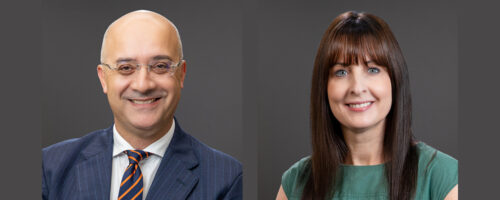

By Dr. & Eng. Asia Mir Amiroddin Al Qurashi Real Estate Investment Consultant Academic at the Real Estate Innovation Experts Institute Certified Assessor in Innovation, Global Innovation Institute Consultant in Quality, Design, and Development
In this five-part series, I examine Dubai real estate through a disciplined investor lens: confidence and governance, historical market design, crisis resilience, asset scarcity, and execution. Each article stands independently while contributing to one coherent thesis – durable returns are created when institutional strength, urban direction, asset quality, and financial discipline reinforce one another.
Dubai’s investment case rests on five connected strengths: an enforceable regulatory framework, deep and visible transaction liquidity, continuous infrastructure delivery, population and business expansion, and a diversified range of assets and price points. These strengths do not make every property attractive or eliminate market cycles. They make Dubai a market in which disciplined investors can assess demand, protect rights, measure risk, and plan an exit with greater confidence. The practical conclusion of this series is therefore selective rather than promotional: invest where the city’s long-term direction, the micro-market’s real demand, the asset’s operating quality, and the deal’s financial resilience all support the same decision.
ARTICLE ONE – THE CONFIDENCE CAPITAL
Why Dubai’s Safety, Governance, and Liquidity Make Its Real Estate Market Investable
Professional perspective: I approach investor confidence as a measurable outcome of governance, liquidity, infrastructure, and the city’s capacity to convert strategy into sustained demand.
Dubai real estate stands out because it combines qualities that rarely coexist at scale: regulatory structure, market liquidity, infrastructure depth, and long-term strategic planning. In many markets, investors are forced to choose between safety and upside. More mature markets may offer stronger legal clarity but limited growth, while faster-growing markets may offer appreciation potential with weaker transparency or contract enforcement. Dubai has increasingly positioned itself between those extremes. Official data released by the Dubai Land Department on 9 April 2026 shows that total real estate transactions reached AED 252 billion in Q1 2026, up 31% year on year by value, while volume rose 6%, with 60,303 transactions recorded within 718,160 real estate procedures. Investments reached AED 173 billion across 57,744 investments, and the investor base expanded to 48,448, including 29,312 new investors. Foreign investment reached AED 148.35 billion, while luxury real estate investment reached AED 87.71 billion. For investors, these are not just headline figures. They point to transaction depth, recurring capital inflow, and confidence from both existing and first-time participants. When a market remains liquid, transparent, and capable of attracting new capital, it becomes easier to enter, hold, refinance, and eventually exit with less friction.
Reading Transactions as Evidence, Not Promotion
Registered transactions are especially valuable because they record completed market activity rather than expectations. Dubai Land Department’s official Real Estate Transactions service allows users to monitor transaction values and activity across sales, mortgages, and gifts, with visibility into existing and off-plan property. Each category answers a different investment question: sales reveal effective demand and capital circulation; mortgages indicate the role of financing and the breadth of the buyer base; and gifts show non-sale transfers of accumulated property wealth. Read together—not in isolation—these categories help investors distinguish headline enthusiasm from the actual depth and composition of market activity.
Daily visibility is itself part of the market infrastructure. When investors can review official activity by transaction type, value, property status, area, and other characteristics, uncertainty is reduced and comparisons become more disciplined. The practical advantage is not that data chooses the property; it is that data improves the questions an investor asks about timing, segment, liquidity, financing, and exit depth.
The July snapshot reinforces this distinction. Dubai recorded AED 55.73 billion in real estate dispositions across 784,394 procedures during the month. Sales accounted for AED 34.87 billion through 13,928 transactions, mortgages for AED 17.14 billion through 4,466 transactions, and gifts for AED 3.72 billion through 766 transactions. The breadth of activity across outright purchases, secured financing, and non-sale transfers reflects a market functioning through several channels at once. Sales demonstrate active demand, mortgage volumes show meaningful participation by lenders and financed buyers, and gifts indicate the transfer and preservation of accumulated property wealth. Together, these figures strengthen the case that confidence in Dubai is expressed through completed, registered activity rather than sentiment alone.
A major reason for this confidence is governance. Dubai’s market is not simply active; it is structured. The creation of the Real Estate Regulatory Agency under Law No. (16) of 2007 strengthened the regulatory architecture of the sector. The launch of Ejari from 14 March 2010 made rental contract registration mandatory, improving visibility and formal documentation in the leasing market. The establishment of the Rental Dispute Settlement Centre under Decree No. (26) of 2013 added a clearer judicial path for landlord-tenant disputes. These mechanisms matter because real estate returns depend not only on prices but also on enforceability. A property that rents well on paper but sits in an opaque legal environment carries hidden risk. By contrast, registered rental contracts, recognised dispute resolution, and clearer market data make expected cash flows more predictable and reduce part of the risk premium investors usually attach to emerging markets.
Rental Innovation: Flexibility Without Weakening Landlord Security
Dubai Land Department’s rental-modernisation programme points toward a more flexible housing-finance model. Under the announced concept, a tenant selects an eligible property, a participating local bank pays the annual rent to the landlord, and the tenant repays the bank in structured instalments of up to twelve months at zero interest, subject to the final approved terms and credit assessment. The wider Flexi Rent framework already supports monthly, quarterly, and semi-annual payment options under regulatory oversight. If implemented as designed, the model would address one of Dubai’s most distinctive rental frictions: the concentration of a full year’s housing cost into one or a small number of payments.
For investors, the mechanism can align interests across the rental chain. Landlords may receive contracted annual rent upfront from a regulated financial institution, reducing collection volatility and improving cash-flow visibility; tenants gain payment schedules that better match monthly income; and eligible properties may reach a broader resident base, potentially supporting occupancy and renewal rates. Protection depends on execution: investors should verify bank eligibility rules, treatment of defaults and early termination, fees, insurance, assignment rights, Ejari integration, and the exact party bearing credit risk. The initiative is therefore best understood as an institutional tool that can strengthen rental-market accessibility and stability – not as a guarantee of rent, occupancy, or tenant solvency.
Business Events as a Multi-Sector Real Estate Demand Engine
Dubai’s business-events calendar adds a recurring, diversified source of property demand. Through the end of 2026, Dubai World Trade Centre and Dubai Exhibition Centre are hosting major platforms across energy, investment, property, healthcare, technology, cybersecurity, travel, finance, construction, automotive, education, food manufacturing, transport, and aviation. Events such as Middle East Energy, AIM Congress, the International Property Show, Arabian Travel Market, GITEX Global, The Big 5, WETEX, and Automechanika Dubai draw exhibitors, decision-makers, specialists, and investment delegations into the city. Their value is not limited to visitor spending: they create meetings, supplier contracts, recruitment, temporary stays, and reasons for companies to establish or expand a permanent Dubai presence.
The effect reaches several property segments. Hotels, serviced apartments, and licensed holiday homes can benefit from event-led room nights around Trade Centre, Downtown, Business Bay, Expo City, and connected Metro corridors. Offices, retail, restaurants, and professional-services space gain when visiting firms convert short engagements into regional operations. Residential demand can deepen through assignments, recruitment, company formation, and relocation. Industrial and logistics property may benefit more indirectly but often for longer, as exhibitions in construction, food, energy, automotive, healthcare, and technology lead to distribution agreements, inventory requirements, light-industrial activity, and warehousing demand. The expansion of Dubai Exhibition Centre to 140,000 square metres in its first phase, with capacity for up to 50,000 visitors a day and direct access to Expo 2020 Metro Station, strengthens the long-term case for the Expo City–Dubai South corridor as a business, hospitality, logistics, and mixed-use node.
For investors, the calendar should be translated into measurable local demand. Hotel and short-stay underwriting should test seasonality, licensing, average daily rate, occupancy, management fees, and performance outside peak weeks. Office analysis should examine tenant quality, fitted-space competition, lease length, and whether occupiers remain after an event cycle. Retail should rely on repeat daily footfall, not exhibition days alone. Industrial acquisitions require suitable transport access, power, loading, zoning, and identifiable sector demand. A strong events pipeline can diversify demand and improve asset use, but protection still comes from verified leases, conservative cash-flow assumptions, regulatory compliance, and an exit market broader than one event or season.
Safety as an Investable Market Foundation
Safety adds an important dimension to this confidence framework. In Numbeo’s 2026 Safety Index by Country, the UAE ranks first with a score of 86.0. Because the index is perception-based, it should be read as one supporting indicator rather than as a standalone guarantee of investment performance. Even so, a strong safety perception can influence relocation, household formation, business expansion, and the willingness of residents to make longer-term commitments. For real estate, those behavioural effects may support occupancy, tenant retention, and demand across residential and commercial segments.
The wider UAE framework adds another layer to Dubai’s real estate case. The UAE ranked fifth globally in the IMD World Competitiveness Ranking 2025 and recorded leading employment and labour-market performance. Official government platforms also confirm that the country does not levy personal income tax on individuals. None of these indicators alone guarantees real estate performance, but together they describe an operating system characterised by service efficiency, labour-market strength, institutional continuity, and a pro-resident business environment. Demand for property is not created by buildings alone; it is supported by jobs, confidence, mobility, digital convenience, legal enforceability, and the ability of residents and businesses to plan ahead.
A practical investor should translate these national indicators into financial meaning rather than reading them as abstract achievements. A high-trust environment may reduce perceived market risk, a strong labour market can deepen the tenant pool, and advanced digital services can lower transaction friction. The absence of personal income tax can increase disposable income and make long-term relocation more attractive for professionals, entrepreneurs, and internationally mobile families. From a real-estate perspective, that can support housing demand from actual users of the city, not only speculative buyers.
Dubai should therefore not be analysed through one-dimensional labels such as “high growth,” “luxury driven,” or “tax efficient.” A better framework is to see it as an ecosystem where governance, urban planning, mobility, economic competitiveness, social cohesion, and investor access reinforce one another. Yield-focused investors may target communities with stable leasing demand and manageable service charges. Growth-focused investors may prefer emerging districts linked to future transport or large-scale infrastructure. Capital-preservation investors may prioritise established communities, superior management, and liquid price points. Dubai can host all three strategies, provided selection remains disciplined.
The Dubai Social Agenda 33 and Dubai 2040 Urban Master Plan broaden this thesis. Family stability, housing quality, healthcare, education, green space, transport accessibility, and preservation of natural areas are not soft themes; they influence tenancy duration, resident retention, utility burden, mobility efficiency, district appeal, and asset resilience. When economic, social, and environmental sustainability move together, the result can be more durable rental income and stronger confidence in community-based assets.
The first-half 2026 delivery record adds a supply-side test of confidence. Dubai completed 104 real estate projects, 38.7% more than in H1 2025, delivered 24,537 new units, up 36%, and brought projects with an investment value exceeding AED 111 billion into completion, up 52%. The completed-project land area reached about one million square metres, double the corresponding level a year earlier. These figures show that confidence is not confined to transaction demand: capital is being converted into finished projects and usable stock. The leadership framed this performance as progress toward D33 and as evidence of a model built on flexible legislation, advanced infrastructure, transparency, and partnership with the private sector – conditions that strengthen delivery credibility and reduce execution uncertainty for investors.
Approaching One Million Homes: Scale, Absorption, and the Next Competitive Phase
Dubai’s residential inventory has reached approximately 977,000 units after the addition of about 20,000 homes during the first half of 2026, placing the market on course to exceed one million residential units by early 2027. A further 22,000 units are expected during the second half of 2026, while announced developer schedules and projects under construction indicate a much larger pipeline of approximately 390,000 additional homes by the beginning of the next decade. The milestone is significant because it reflects the transformation of Dubai into a large, diversified housing market; however, scale alone is not a measure of safety or performance. The central investment question is whether delivered supply is absorbed by population growth, job creation, household formation, capital inflows, occupancy, and the specific quality and location of each unit.
The historical comparison clarifies both the opportunity and the need for discipline. Dubai’s housing stock increased from an estimated 693,000 homes serving approximately 3.4 million residents in 2020 to about 977,000 units alongside a population of roughly 4.6 million by 2025. Over the same period, average residential capital values rose from approximately AED 866 to AED 1,696 per square foot. These movements suggest that supply expansion occurred alongside substantial demand and repricing, rather than automatically suppressing values. Nevertheless, future absorption is likely to become more uneven across locations, asset classes, and price bands as the delivery pipeline progresses.
For investors, the coming phase should be evaluated through an absorption framework rather than a citywide headline. Relevant indicators include completed-unit handovers, occupancy and vacancy by micro-market, rental renewals, concession levels, resale listing duration, service-charge efficiency, and the depth of end-user demand. A project may remain resilient even during broad supply growth if it combines differentiated location, practical layouts, credible management, transport access, and a price band supported by real household incomes. Conversely, highly replicable units in concentrated delivery corridors may face slower leasing, greater incentives, and more competitive resale conditions.
For developers, additional supply is likely to raise the standard of competition. The next stage may bring greater flexibility in payment plans, stronger emphasis on finishing quality and shared amenities, and renewed scrutiny of unit sizes. Affordability pressures have already encouraged smaller, more attainable off-plan products: the average size of newly launched residential units declined to about 1,300 square feet in 2025 from more than 2,000 square feet in 2020. Smaller units can improve total-ticket affordability and broaden the buyer pool, but design efficiency must be protected; reduced area should not compromise storage, privacy, circulation, or long-term resident satisfaction.
Dubai’s 2040 population objective – approximately 5.8 million residents – has been associated with an estimated requirement for around 1.4 million homes, providing a long-term demand framework for continued development. Yet the path will not be uniform. Construction costs, material-supply constraints, delivery slippage, financing conditions, and changing buyer preferences can alter the timing and geography of new stock. The scientifically sound conclusion is therefore balanced: the one-million-unit threshold confirms market scale and long-term urban expansion, while the 390,000-unit pipeline makes project selection, conservative underwriting, and micro-market analysis more important than ever.
Dubai’s advantage is not that prices move in only one direction. It is that the city continues to develop the systems that make property ownership more transparent, usable, and investable over time: legal clarity, digital efficiency, global connectivity, infrastructure depth, and strategic planning. These strengths can support demand and reduce friction, but they do not replace asset-level discipline. The persuasive case for investing in Dubai is therefore structural and selective: choose a property whose location, operating quality, net income, and exit depth allow the wider strength of the city to translate into durable investment performance.
ARTICLE TWO – FROM 1971 TO TODAY
How Dubai’s Real Estate Evolution Reflects Leadership Vision and Market Design
Professional perspective: Dubai’s property market is best understood not as a sequence of projects, but as a disciplined pattern of economic purpose, infrastructure delivery, place-making, and institutional refinement.
The story begins with the formation of the UAE in 1971, which marked the start of a long institutional project rather than a short property cycle. In the early decades, the country focused on ports, roads, public services, aviation, energy systems, and state capacity. Real estate value did not emerge in isolation; it emerged because the wider economy was being designed to support trade, mobility, and urban growth.
The modern phase accelerated in 2002, when foreign ownership in designated freehold areas opened Dubai more directly to international capital. This policy shift changed the nature of the sector: international investors could hold title, plan long term, and compare Dubai with major global cities and resort markets. Master-planned communities and flagship projects became economic statements as much as construction projects, bundling roads, utilities, access, leisure, branding, scarcity, and livability into one investable proposition.
Dubai Internet City, launched in 1999, demonstrated an early version of this city-building formula: create a sectoral node, support it with policy and infrastructure, then allow office, residential, and service demand to crystallise around it. Global Village translated cultural diversity into recurring footfall, family-oriented consumption, and destination branding. Burj Khalifa anchored Downtown Dubai as a globally legible district where tourism, prestige, residence, business activity, and public realm reinforce one another. The Dubai Metro, launched in 2009, changed everyday commuting logic and made accessibility a measurable pricing variable.
Expo 2020 Dubai, held in 2021–2022, showed how a global event can be designed as a long-horizon urban and economic instrument rather than a short-lived spectacle. Its evolution into Expo City Dubai illustrates a second-life principle that improves district durability and converts temporary attention into lasting urban value. Etihad Rail reflects the same strategic thinking through logistics, freight mobility, and regional integration. Transport corridors are not merely engineering assets; they are future demand frameworks that can reshape industrial geography, warehousing activity, and the relative value of residential and mixed-use districts.
Delivery at community level provides a practical example of that model. In August 2026, handover began for 892 homes at Jebel Ali Village, an 80-hectare, low-density community expected to accommodate approximately 5,500 residents. Landscaped parks, walking and cycling routes, sports facilities, children’s areas, swimming pools, and proximity to Sheikh Zayed Road, Ibn Battuta Mall, and Discovery Gardens Metro Station connect housing delivery with livability and mobility. For investors, the milestone matters because completed infrastructure and resident move-ins convert a development promise into an operating neighbourhood, supporting occupancy formation, rental evidence, and more reliable resale comparables.
Ain Dubai, Dubai Creek Harbour, the Mohammed Bin Rashid Space Centre, and the Ministry of Possibilities reveal additional dimensions of Dubai’s model: destination identity, future-oriented urban storytelling, frontier-sector ambition, and adaptive governance. Investors must distinguish between operational delivery and aspirational narrative, but they should also recognise that Dubai repeatedly uses major initiatives to deepen ecosystems rather than stage isolated moments.
The Q1 2026 market numbers add an analytical layer to this history. Transaction value rose 31% year on year while volume rose 6%. This divergence may point to larger average ticket sizes, premium-segment activity, or a preference for strategically located assets. A disciplined reading considers this alongside new-investor growth, foreign capital, luxury activity, and market turnover rather than turning one statistic into a complete theory.
The deeper lesson from 1971 to today is sequencing: state-building and connectivity; place-making and sector clustering; regulatory refinement; then a more sophisticated investor base pricing governance, liquidity, and operating quality. Leadership vision becomes investable only when it is converted into daily economic life through airports, roads, metro systems, free zones, services, and integrated districts.
For investors in 2026, the conclusion is clear. Dubai real estate has expanded not simply because of cyclical demand, but because policy, infrastructure, and urban ambition have repeatedly widened the pool of people and businesses able to use the city productively. Serious analysis should therefore begin with how Dubai creates demand, not merely with how it prices property.
ARTICLE THREE – CRISES, CORRECTIONS, AND CONFIDENCE
Understanding Why Dubai’s Real Estate Cycle Behaves Differently
Professional perspective: A resilient market is not one that avoids corrections; it is one that learns from them, strengthens its institutions, and preserves the conditions for recovery.
Every serious real-estate market moves through cycles, and Dubai is no exception. Prices do not rise in a straight line, liquidity changes, and investor sentiment can reverse quickly. What distinguishes Dubai is not the absence of corrections, but the market’s repeated capacity to adapt after them.
The 2008 global financial crisis was the defining early stress test. Before that period, the market had expanded rapidly and included speculative excess. The correction was severe, but its lasting effect was institutional strengthening: regulation improved, discipline increased, and transparency became more important. The 2014–2015 oil-price downturn provided another test. The UAE’s resilience reflected the depth of an economy supported by trade, tourism, aviation, logistics, finance, and services rather than one source of demand.
The post-2018 period and the COVID-19 shock reinforced a further lesson: confidence in Dubai is tied not only to price momentum, but to the perceived capacity of the city and the wider UAE to respond quickly. Reopening, policy flexibility, international positioning, and residency reforms helped accelerate recovery and attract capital seeking safety, lifestyle, tax efficiency, and geographic diversification.
Dubai’s cycle can behave differently because sentiment, policy, infrastructure announcements, visa reforms, and international capital interact quickly. This speed may increase visible volatility, but volatility and fragility are not the same. Some movements reflect speculation; others represent a genuine repricing of future demand, lower friction, or stronger confidence in governance. The skilled investor separates these forces.
International comparison also helps clarify what “safety” should mean. In August 2026, average newly listed asking prices in Great Britain fell 2.0% to £364,999 – the largest August decline since 2018 – while London recorded a 3.1% annual fall amid the highest level of available stock in the capital since 2010. This does not prove that one market is universally superior to another; the measures, cycles, financing conditions, and local segments differ. It does show why investors should assess supply pressure, mortgage costs, transaction momentum, and policy responsiveness together. Dubai’s attraction rests less on the absence of volatility than on its combination of active liquidity, population and business growth, infrastructure delivery, and regulatory adaptability.
Recovery is also shaped by perceived state capacity. Investors ask whether the wider system still works: transport, service continuity, safety, administration, and public delivery. When confidence in that operating system remains high, corrections can become periods of selective opportunity rather than universal retreat. Yet confidence must never replace discipline.
During softer phases, investors should become more demanding. They should focus on buildings with durable tenant appeal, areas with multiple demand drivers, reasonable service charges, and entry prices that permit realistic stress scenarios. A correction exposes the difference between assets carried by sentiment and assets capable of producing income. The right response is analytical: verify rent assumptions, reassess vacancy and competition, test resale liquidity, and confirm the presence of a real user base.
By 2026, Dubai is best understood as a market with strong institutional foundations, rapid policy responsiveness, and significant exposure to global capital flows. Those features can support recovery, liquidity, and demand, but they do not make the market automatically safe or remove project-specific risk. The opportunity lies in the combination of adaptability and growth; the responsibility lies in testing entry price, income durability, financing exposure, supply competition, and exit depth before committing capital. Dubai’s cycle rewards preparation more reliably than prediction.
ARTICLE FOUR – SCARCITY, VALUE CREATION, AND DEVELOPER DISCIPLINE
How Smart Investors Protect and Compound Capital
Professional perspective: Capital is protected when scarcity is genuine, usability is tested from the resident’s perspective, and every operating cost is treated as part of the investment – not as an afterthought.
In real estate, scarcity is one of the most powerful long-term drivers of value, but only when it is real, durable, and economically meaningful. Genuine scarcity may come from limited waterfront frontage, restricted prime land, superior transport access, protected views, low replacement potential, or a location embedded in a strong service and lifestyle ecosystem.
Sophisticated investors ask whether an asset’s appeal can be replicated nearby tomorrow. If it cannot, the property may enjoy stronger pricing power. Yet scarcity protects value most effectively when paired with practical utility. A rare asset that is hard to rent, maintain, or operate is less compelling than a less glamorous asset with stable demand and strong net income.
Developer selection is therefore a risk-management exercise, not a branding exercise. Investors should test launch price, layout efficiency, infrastructure context, delivery history, after-sales quality, funding credibility, specification, and operational resilience after handover. New developers should not be dismissed automatically, but they should be tested more rigorously.
Because off-plan remains central to Dubai, due diligence must extend beyond brochure language. Construction discipline, progress transparency, build quality, service charges, facilities management, insulation, acoustic performance, moisture resistance, parking usability, and lift reliability all influence tenant experience, vacancy, and resale value. Investors should examine the asset through the eyes of a resident: can a family or professional use it comfortably every day, and does that experience justify the rent?
Scarcity should also be tested at the micro level. Two apartments in the same district may have different economics because of orientation, heat gain, natural light, privacy, noise, parking, storage, and layout. These details influence tenant retention and willingness to pay. Treating all units in a “good area” as interchangeable is a common and costly error.
Design and construction quality shape operating efficiency. In a hot climate, thermal performance, glazing, insulation, ventilation, and façade choices affect comfort and utility burden. Near waterfronts, resilience against humidity and corrosion matters. In busy corridors, acoustic insulation can directly affect renewals. Over long holding periods, these differences become financially significant.
Service charges are among the most underestimated variables in Dubai investing. Buyers often focus on purchase price and gross rent, then discover that service charges, maintenance, insurance, updates, and management materially reduce net yield. The correct measure is true net operating income. A modest building with lower charges and stable occupancy may outperform a luxury asset with higher gross rent but weaker net returns.
A disciplined investor evaluates every property across three dimensions: uniqueness, usability, and economics. Uniqueness asks what is difficult to reproduce. Usability asks whether people can live or work comfortably. Economics asks whether the asset still performs after realistic costs and downside scenarios. When all three are strong, capital is better protected and long-term upside becomes more credible.
ARTICLE FIVE – TIMING, RENTAL RETURNS, AND STRATEGIC EXECUTION
How to Invest in Dubai with Greater Discipline
Professional perspective: The strongest investment is not the most heavily promoted opportunity; it is the deal whose market logic, asset reality, cash flow, downside protection, and exit strategy all agree.
Timing is one of the most misunderstood variables in real-estate investing. The best project is not always the best deal, and the best area is not always the right entry point at every moment. Dubai rewards investors who understand where a location sits in its cycle and how a specific asset fits the wider demand map.
A disciplined decision moves through three layers: market, asset, and deal. At the market level, assess liquidity, new-investor inflows, governance, and future demand. Q1 2026 data – AED 252 billion in transactions, AED 173 billion in investments, expanding participation, and strong foreign capital—indicates market depth. At the asset level, test daily reality: visit by day and night; study access, congestion, schools, healthcare, retail, public realm, drainage, noise, management, layout, light, privacy, storage, insulation, parking, and target tenant. At the deal level, let the numbers decide.
Calculate conservative rent and deduct vacancy, service charges, maintenance, insurance, management, and other recurring costs to determine true net operating income. Price per square foot is a supporting benchmark, not a primary decision tool. Approximate value is driven by NOI divided by cap rate, while the quality of governance and services may influence perceived risk and required returns only if the asset itself is efficient.
Every purchase should be stress-tested. What happens if rent falls 10%, vacancy reaches 10% or 12%, or service charges rise 20%? When debt is used, a DSCR above roughly 1.2 generally offers more comfort than a ratio near 1.0, and a cash buffer covering six to twelve months of obligations improves resilience.
Future demand drivers must be read practically. The Dubai Metro Gold Line approved in April 2026 with an estimated AED 34 billion investment, a 42-kilometre route, and 18 stations – can influence vacancy, rent resilience, and resale liquidity where station access becomes economically meaningful. The Dubai 2040 Urban Master Plan signals long-term commitment to mobility, livability, green space, and service distribution. D33 supports the case for expanding trade and business demand, while the Dubai Social Agenda 33 strengthens the thesis for family stability and longer-duration occupancy.
Infrastructure performs best when reinforced by social policy. Mobility, housing quality, schools, healthcare, public realm, and cohesive neighbourhood design work together to convert access into residency stability. Expo 2020 Dubai and Etihad Rail support the same framework from different directions: one through legacy-led district development and international visibility, the other through wider logistics and transport integration.
The investment plan should begin before the purchase. Define the objective—yield, growth, preservation, or a blend. Identify the target tenant or buyer. Model the conservative scenario, understand the full cost of ownership, and define the exit before the entry: who is likely to buy in three to five years, at what price band, and under what conditions?
From an investment standpoint, economic ambition, environmental quality, and social durability are inseparable. Together they influence vacancy, turnover, maintenance expectations, community reputation, pricing resilience, and exit liquidity. Disciplined Dubai investing is not about reacting to noise; it is about aligning capital with structure, quality, and long-term urban direction.