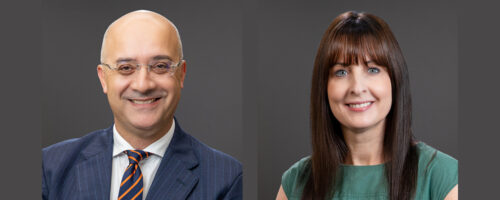

Ms. Asia Al-Qurashi
Certified real estate consultant from the Dubai Land Department
Certified Innovation Assessor from the Global Innovation Institute
Quality and Development Consultant
Certified entrepreneurial trainer
Lecturer at the Institute of Real Estate Innovation Experts
Real estate investment in the UAE: Why does it remain the safest and most attractive in the region?
When we refer to real estate investment in the UAE, we are not just talking about buying and selling, but about an investment decision within an environment that has proven its ability to protect value and enhance opportunities through different economic cycles. And here lies the real difference between a market that appears attractive on the surface and a market that can truly absorb capital and maintain its quality. And when Kearney reports confirm that the UAE ranked ninth globally in foreign direct investment confidence and maintained the second position among emerging markets after China, this not only reflects a positive image but also provides clear evidence of the strength of the environment in which real estate operates, in terms of stability, clarity of policies, and the ability to attract long-term capital.
First: The security in the UAE real estate is not an impression… but the result of an organized market and an economy that knows how to protect value.
The security of real estate investment in the UAE is not based on impression, but on clear standards understood by anyone who professionally deals with real estate assets. The discerning investors does not just ask: Is the market rising? But they also ask: What is the quality of the asset? What is the level of risk? And does this property remain capable of preserving value and easy to liquidate when needed? In the UAE, the answer is reassuring; the real estate market is supported by a diversified economy, clear regulations, and genuine demand that does not rely on a temporary wave or quick speculation.
The regulatory factor is no less important than the economic factor. The professional real estate investor does not only evaluate the growth potential, but also considers the clarity of policies, the ease of procedures, and the efficiency of the environment in which their investment will operate. In this regard, the UAE offers a clear ,well-planned and structured model. The state has approved the National Investment Strategy 2031, with the goal of increasing annual foreign direct investment flows from 112 billion dirhams in 2023 to 240 billion dirhams by 2031, and raising the cumulative balance to 2.2 trillion dirhams. This type of planning directly benefits real estate; because the real estate market thrives more when it is part of a long-term economic vision, rather than just a temporary movement linked to a transient circumstance.
Secondly: Dubai in numbers… A mature market proving its strength in deep demand, not in noise.
Reports from global real estate consultancy firms confirm that what is happening in Dubai is not a passing wave, but rather growth based on clear indicators. According to Savills’ report for the fourth quarter of 2025, the number of residential transactions in Dubai exceeded 200,000 during the year, with an annual increase of 18%. Sales off-plan accounted for 72% of total activity, reflecting strong confidence in future projects, not just in ready units.
The importance of these figures increases when we look at the quality of demand, not just its volume. The report itself shows that apartments accounted for 83% of total transactions, while villas and townhomes maintained a strong presence. The percentage of transactions exceeding 5 million dirhams also increased to 9% of the total activity. This means that the market is not only growing in size, but also sustainability in demand and the value of transactions. As for the luxury segment, Dubai recorded more than 6,700 residential transactions exceeding 10 million dirhams in 2025, which is a clear indicator of investors’ confidence in the real estate market in the long term.
And here emerges a point I see essential for any serious real estate investor: the Dubai real estate market today is no longer is just an active market; it has become a very mature, regulated, organized, and digitized market, regarded globally as one of the best practices in regulation and transparency. The Dubai Land Department has developed an advanced digital system over the past few years that has enhanced transparency, facilitated data access, and improved service efficiency, starting from the Dubai REST platform for smart real estate services, to the smart rental index powered by artificial intelligence, and the governance systems for real estate advertisements. This has contributed to building trust, providing a clearer pricing reference, and reducing the unpredictability that historically confused many other markets.
And this is not just a rhetorical description, but a reality confirmed by international indicators and official data. Dubai has maintained its position as the most transparent real estate market in the Middle East and North Africa region according to the Global Real Estate Transparency Index for 2024. It also ranked among the top global markets in terms of transparency improvement, driven by the expansion of digital services, the enhancement of compliance systems, and increased data availability for investors. In 2025 and 2026, the Land Department continued this path through smart solutions that enhanced oversight, supported the accuracy of advertisements, and improved decision-making efficiency. That’s why I always say that anyone who wants to understand how a successful real estate market is built sustainably, Dubai today is not just a success story, but a practical reference that the world closely and respectfully follows for its many repeated successes.
Thirdly: The speed of recovery is not a fleeting advantage… but an essential element in reducing real estate risks.
One of the UAE’s greatest strengths is that it does not only establish its presence in prosperous years, but also demonstrates its true efficiency in times of pressure. During the COVID-19 pandemic, the state acted swiftly to protect the economy and business continuity thru a comprehensive economic support plan worth 100 billion dirhams, along with an additional federal stimulus package worth 16 billion dirhams. This response was not just a temporary measure, but a clear message to the market that the state intervenes in a timely manner to protect both the economy and confidence.
What reinforces this image is that the International Monetary Fund praised the UAE’s swift response to the pandemic and linked it to the strength of subsequent growth. Total growth reached 6.9% in 2022, while the non-oil economy recorded a growth of 5.3%, supported by local activity, tourism, and deeper factors; the language of asset quality, value preservation, return sustainability, and long-term decision quality.