Developers News Magazine January 2026 Cover Page Interview
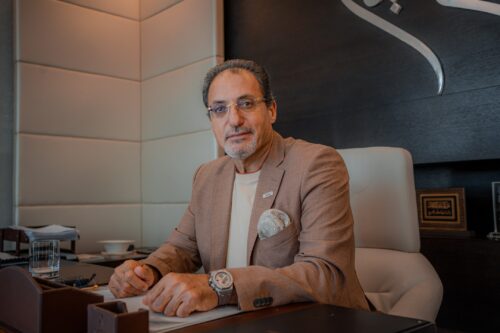
Mr. Moafaq Al Gaddah – Chairman of MAG Group Holding By Tariq Ramadan – Jan. 16, 2026 I’ve known Mr....

Real estate in the UAE has long been defined by ownership in its most literal form. You bought a property, held it, managed it, and relied on the city’s growth to do the rest. It worked, but it demanded patience, capital, and commitment.
Alternative real estate investments loosen that model. They keep the economics of property intact while changing how investors participate. The asset remains real estate. The pathway into it has evolved.
When simplified, alternative real estate investing in the UAE comes down to five clear choices. Each reflects a different balance between control, liquidity, income, and effort.
as a response to friction, not failure. Traditional ownership continued to perform, but it required large upfront capital, long holding periods, and hands-on involvement that increasingly conflicted with how modern investors earn, relocate, and manage risk. As cities expanded and capital became more mobile, the gap between wanting property exposure and being able to own property widened.
Market maturity, regulatory evolution, and digital platforms closed that gap. New structures allowed capital to participate in real estate without inheriting the full operational burden of ownership. Property shifted from a permanent commitment into a flexible allocation.
The appeal of alternative real estate is not limited to investors. Its real strength lies in how it aligns incentives across investors, individual owners, and developers, each solving a different constraint created by traditional ownership.
The UAE remains early in its alternative real estate cycle, shaped by regulation-first thinking and a preference for proven demand before scale. That caution has limited complexity, but it has also left clear room for expansion.
In more developed markets, alternative real estate has moved far beyond access-driven models:
Tokenised real estate: Digitised ownership interests that trade with near real-time liquidity.
Single-asset REITs: Vehicles focused on individual buildings rather than portfolios.
Real estate private credit: Fixed-return products that finance developments instead of owning them.
Sector-specific platforms: Investments dedicated to assets such as logistics, data centres, or student housing.
Crowdfunded development equity: Direct participation in development profits through structured platforms.
This is the art of the possible. These models rely on regulation, transparency, and trust, all of which continue to strengthen in the UAE. The gaps are transitional, not structural. As frameworks mature, alternative real estate will move from novelty to strategy.
For investors looking to act now, the market is still concentrated but functional.
Stake: A leading fractional ownership platform offering shares in completed, income-generating residential properties with full operational management.
Prypco: A digital-first platform focused on simplifying access to property investment through structured, lower-entry models.
SmartCrowd: An early entrant in fractional ownership, offering passive exposure to residential assets with relatively low minimums.
Public markets and REIT exposure: Indirect access through UAE-listed property companies and REIT-style vehicles via local stock exchanges.
The list is still short, but its direction is clear. Alternative real estate in the UAE has moved beyond theory. What began as an experiment in access is steadily becoming part of how property capital is expected to work.

Developers News Magazine (DNM) is a news website and monthly online digital magazine that focusses on news related to developers and off-plan projects including new project launches, project updates, market insights, as well as on-going reports and statistics.
© 2026 Developers News UAE. All rights reserved.