Will the new cycle continue the upward long-term trend?
By Mr. Tariq Ramadan
Editor in Chief – Developers News Magazine (DNM)
Property cycles are a natural and essential feature of a maturing real estate market. Periods of expansion, consolidation and renewed growth allow supply and demand to realign, encourage more disciplined development and lay stronger foundations for sustainable, long-term investment.
Dubai’s property market offers a compelling example. Historical price trends, spanning three major crises since 2008, reveal a remarkable upward trajectory, with the market emerging stronger after each downturn. Yet, as regional tensions test market sentiment and an unprecedented pipeline of new supply approaches, a critical question arises: Will Dubai’s property market continue its upward trajectory, and what will the next cycle look like?
Dubai’s real estate market is entering a decisive new phase, shifting from rapid project launches towards delivery, execution and sustainable growth. Between January and September 2026, residential launches fell 44% year-on-year to 52,959 units, while completions rose 37% to 40,489 units. With approximately 213,000 homes due between October 2026 and September 2027, the coming year will test developers’ ability to transform ambitious pipelines into completed properties.
Can Dubai turn its delivery and supply challenges into an opportunity to build a stronger, more balanced and resilient property market? The following report by our strategic partners REIDIN examines the latest data and the forces shaping the emirate’s next real estate cycle (Full report available under Market Insights section on website).
Historically, Prices Have Recovered to Higher Levels
Dubai’s citywide residential sales price averaged AED 843 per sq ft in 2011. Prices subsequently reached AED 1,487 per sq ft in October 2014 before declining to an annual average of AED 1,025 in 2020. The market then recovered strongly, reaching AED 1,939 per sq ft in February 2026. After moderating during the following months, prices stood at AED 1,847 per sq ft in September 2026, around 80% above the 2020 annual average.
September’s slight monthly rise followed declines from February through August. The reading was 0.25% above August but 1.27% below September 2025, showing that prices remained near the cycle high even as momentum moderated.
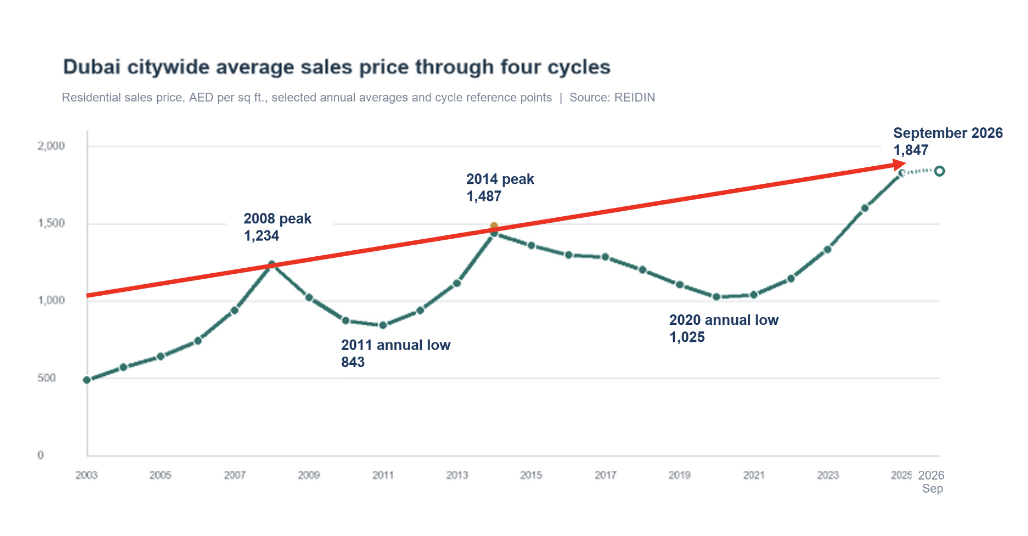
Figure 1. Dubai citywide average residential sales price from 2003 to September 2026.
Developers Shift from Launches to Delivery
Dubai’s development cycle is shifting from new launches towards project delivery. From January to September 2026, developers launched 52,959 residential units and completed 40,489, while approximately 213,000 units are due over the following 12 months. The next phase will depend on how efficiently developers convert this pipeline into completed residential units. The market is therefore moving from rapid launches towards the harder task of delivering projects already sold.
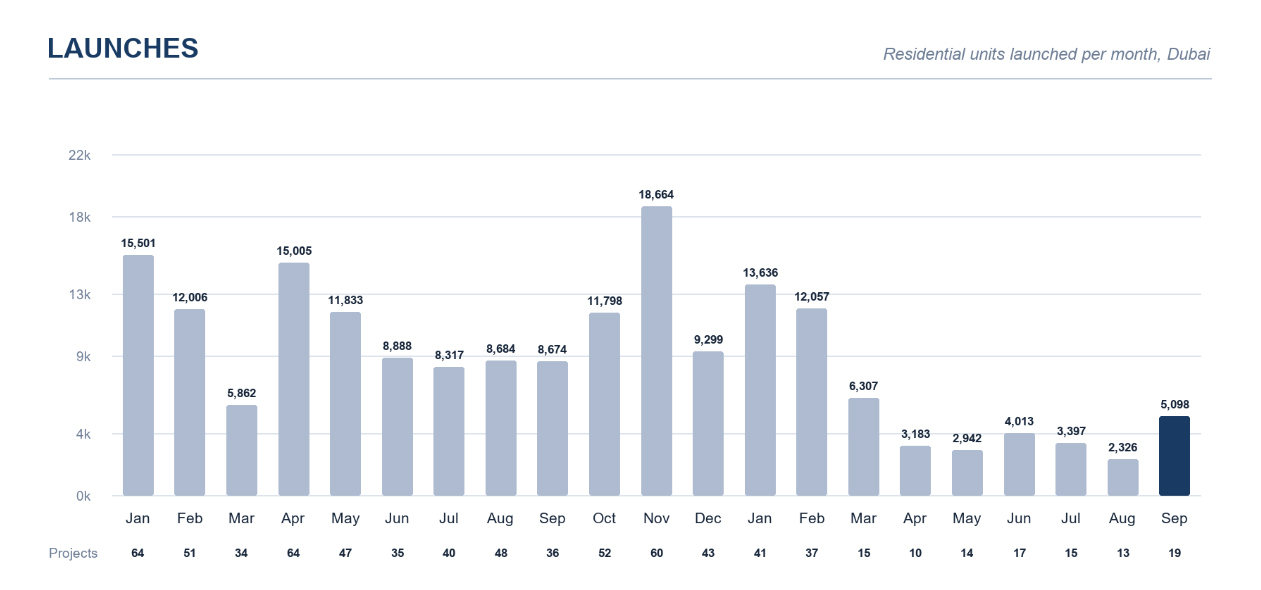
Figure 2. Monthly residential launches in Dubai, January 2025 to September 2026.
Dubai completed 4,953 residential units in September, 22% more than in August and nearly four times the September 2025 total of 1,290 units. The September increase extended the recovery from 3,913 units in July and 4,066 in August.
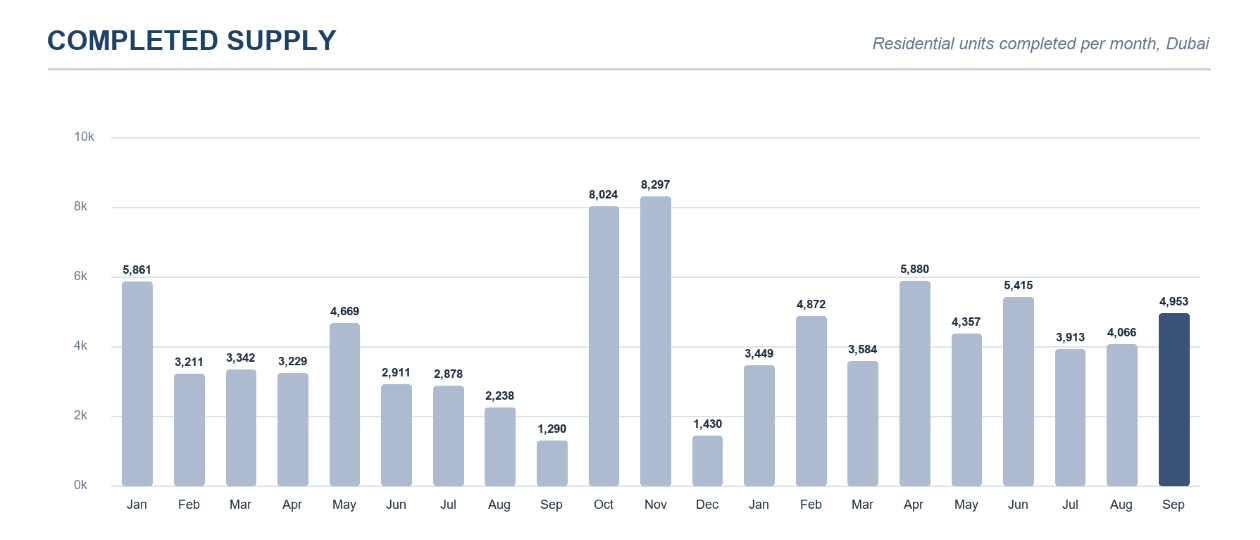
Figure 3. Residential units completed per month in Dubai, January 2025 to September 2026.
The under construction pipeline remains large after excluding projects classified as under planning or on hold. Based on current due dates, 58,581 residential units are scheduled for completion in the final quarter of 2026, and roughly 284,000 are due by the end of 2027. The under construction pipeline scheduled through 2029 totals approximately 496,000 units. Due dates may change, but delivery of even part of this pipeline would increase competition among landlords and developers.
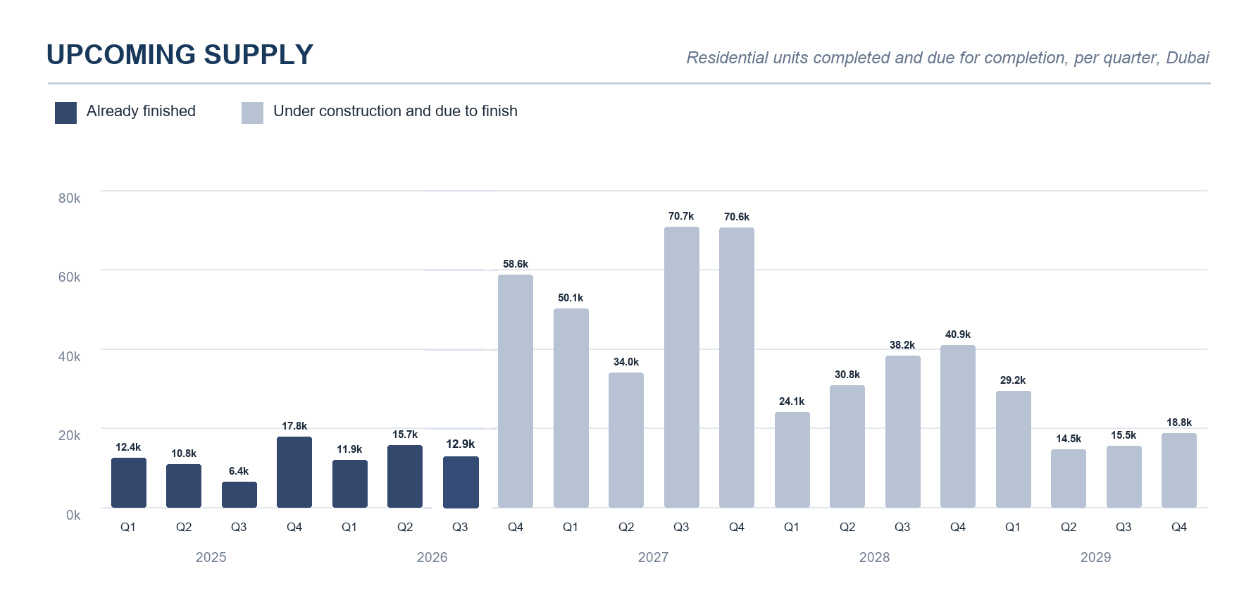
Figure 4. Completed and upcoming residential supply.
What do the experts say?
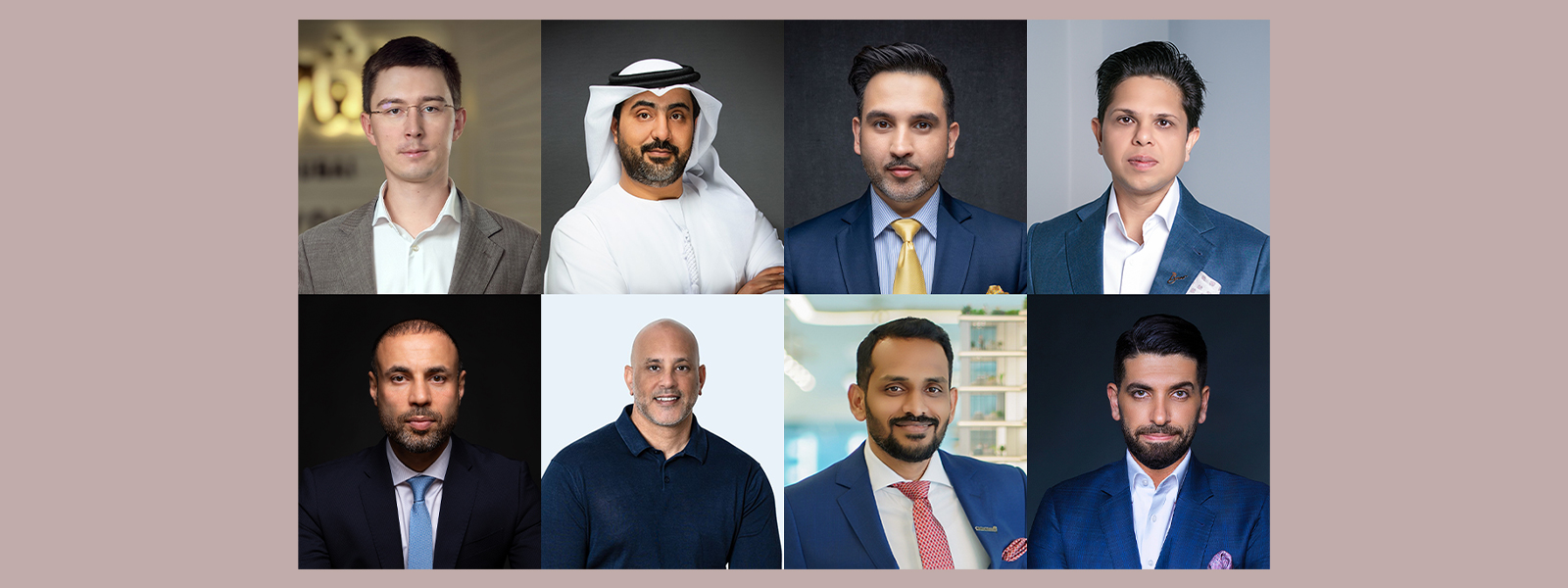
Taking into account the latest market data, upcoming supply and evolving economic conditions, we asked leading real estate developers and industry experts to share their perspectives on the road ahead. From short-term market adjustments over the next three years to long-term growth prospects, their insights explore the challenges, opportunities and investment strategies that could shape Dubai’s next property cycle.

Mr. Madhav Dhar
Co-Founder & CEO of ZāZEN Properties“Dubai’s real estate market is entering a phase where delivery matters as much as launches. With more homes approaching completion, the focus should be on execution, construction quality and the long-term value they bring to residents. Building for end-users, with an emphasis on thoughtful design, has always been a priority at ZāZEN Properties, alongside quality construction and timely delivery. As the market matures, developers who consistently deliver homes that meet buyers’ expectations and support everyday living will be better positioned to sustain demand, strengthen investor confidence and contribute to Dubai’s long-term growth.”

Dr. (CA) Ankur Aggarwal
Chairman & Founder, BNW Developments“When someone invests in a home, they trust us with money they have worked hard to earn. That responsibility does not change when the market becomes more demanding. Dubai can turn supply challenges into lasting opportunities if developers focus on delivery, quality and realistic pricing. More choice gives buyers the chance to ask better questions about construction progress, neighbourhood demand and value. At BNW, we have kept our people and construction at the centre of our decisions. Investor confidence comes from seeing promises honoured. The opportunity is to build homes people want to live in and remain proud to own.”
Mr. Igor Karpikov
Chief Commercial Officer at R.Evolution“As Dubai’s luxury market matures, buyers will become more selective about which developments deserve a premium. I expect the next phase to reward developers who deliver distinctive architecture and sustain quality after handover. Wellness is becoming part of how buyers assess residential value, extending expectations beyond location and visual appeal. This shift requires longevity to be embedded in how buildings function, with healthier indoor environments and efficient resource use. For investors, a project’s resilience will depend on whether those benefits endure. A premium supported by sustainable building performance has a stronger foundation than one dependent on continued market-wide price growth.”
Mr. Ali Mussallam Abu Mansour
Managing Director at Object 1“Dubai’s real estate market is entering a new phase where successful project delivery is becoming more important than the volume of new launches. With more homes approaching completion, the focus must shift towards meeting construction timelines, maintaining quality and fulfilling commitments to buyers. For investors, timely handovers and long-term property value will become increasingly important when making purchasing decisions. This transition also presents an opportunity for developers to strengthen their delivery capabilities and adopt more disciplined approaches to growth. Ultimately, developers who consistently deliver on their promises will be better positioned to sustain investor confidence and support market stability.”

Mr. Farhad Azizi
Group CEO of Azizi Group“The 213,000 homes due between October 2026 and September 2027 reflect a city that has always built for the population it is growing into. Few cities have made bolder promises than Dubai, and fewer still have consistently delivered on – and exceeded – them. This delivery cycle is the latest chapter in that story. In real estate, a launch is a promise. A completion is proof. Investors understand the difference, and increasingly, they invest in proof. That is where the long-term opportunity sits: in what is delivered, and in communities that keep growing in value long after handover.”
Mr. Rakesh Mavath
CEO & CO-Founder of Takeem“Launches are slowing and handovers are catching up but what matters is whether the numbers still work for the person writing the cheque. Investor-led projects get bought on yield. Where rents soften or ownership costs rise, the selling price has to make sense against the net return, and that is what a developer’s build cost has to fit inside. Work backwards from the yield and the project stacks up. Start from the build cost and you may find the buyer isn’t there. Supply and demand both matter. Absorption decides who gets through.”

Mr. Luthfullah K.
Director, Dubai, Casagrand“Dubai’s market is moving from launches to delivery, and that shift favours developers with a proven record of execution. With around 213,000 homes due over the next year, buyers and investors will rightly ask who can deliver on time and to the promised quality. At Casagrand, 22 years and over 180 completed projects have taught us that disciplined execution and timely handover build lasting trust. A more measured pipeline supports healthier, more sustainable growth, and for long-term investors it offers a clearer basis for choosing the right projects and partners.”

Dr. Mohanad Alwadiya
CEO, Harbor Real Estate“Dubai’s real estate market is not slowing down; it is becoming more selective and competitive. As highlighted in Harbor Real Estate’s Q3 2026 report, the market recorded AED 93 billion in property sales despite regional uncertainties. Increased supply is shifting bargaining power towards buyers, encouraging developers to compete on quality, pricing, delivery and value rather than launches alone. For investors, the opportunity is no longer simply buying into Dubai’s growth, but identifying the right property, in the right location, at the right price. This is not necessarily a market correction; it is a market evolution.”