
By: Misbahuddin Saba, Research Analyst specialising in Real Estate Strategy & Market Intelligence at REIDIN
Dubai’s residential market has now lived through four distinct chapters, and REIDIN’s historical indices let us read them as one continuous story rather than as a sequence of unrelated events.
The latest cycle has carried citywide residential prices well above the previous downturn, with the average sales price reaching AED 1,847 per sq ft in September 2026, around 80% above the 2020 average. This price recovery is now being tested by a shift in development activity from new launches to project delivery. From January to September 2026, developers launched 52,959 residential units and completed 40,489, while approximately 213,000 units are due over the following 12 months. The next phase will depend on how efficiently developers convert this pipeline into completed residential units without weakening price resilience.
1- Prices recover to higher levels
Dubai’s citywide residential sales price averaged AED 843 per sq ft in 2011. Prices subsequently reached AED 1,487 per sq ft in October 2014 before declining to an annual average of AED 1,025 in 2020. The market then recovered strongly, reaching AED 1,939 per sq ft in February 2026. After moderating during the following months, prices stood at AED 1,847 per sq ft in September 2026, around 80% above the 2020 annual average.
September’s slight monthly rise followed declines from February through August. The reading was 0.25% above August but 1.27% below September 2025, showing that prices remained near the cycle high even as momentum moderated.
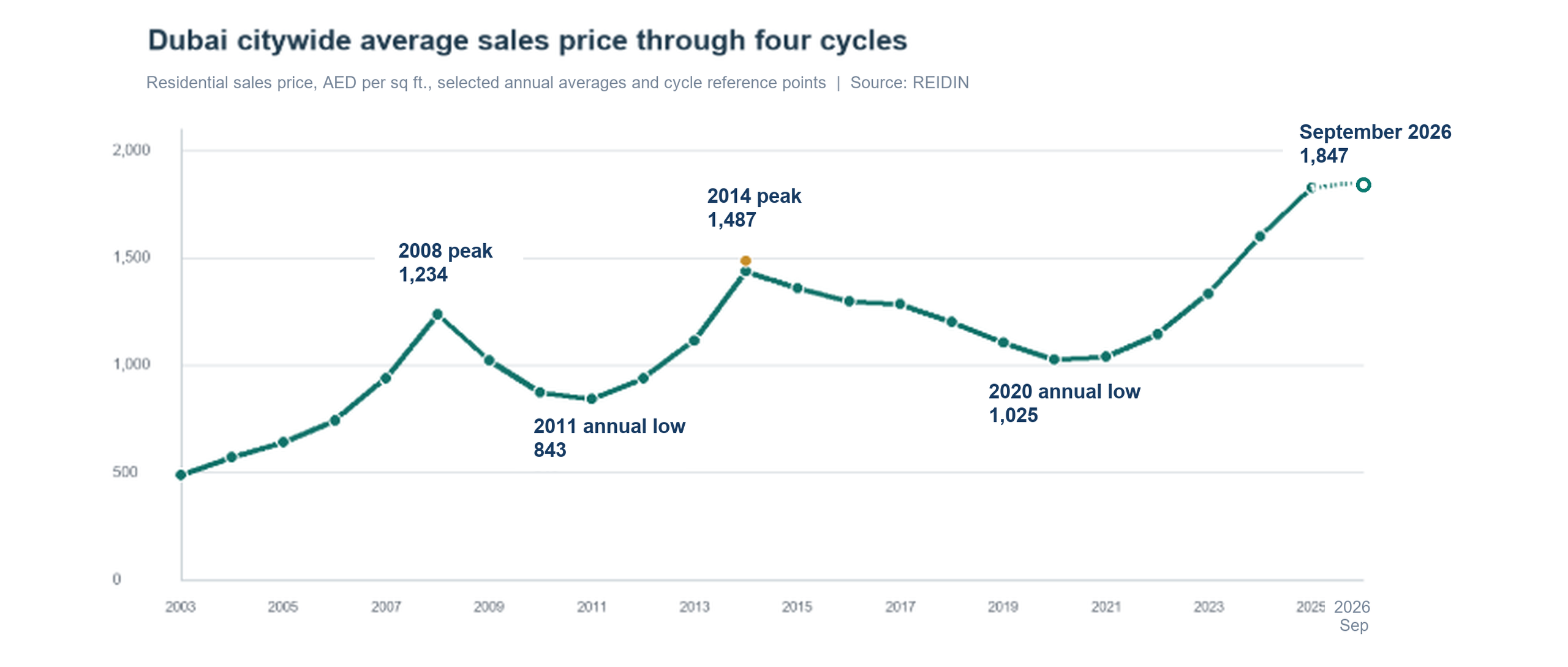
Figure 1. Dubai citywide average residential sales price from 2003 to September 2026.
2- From launch momentum to delivery discipline
Developers launched aggressively through 2025 and began 2026 with 13,636 units in January. The pace weakened as the year progressed: 12,057 units were launched in February, 3,183 in April and 2,326 in August. September launches more than doubled to 5,098 units across 19 projects, up 119% from August but still 41% below September 2025.
From January to September 2026, launches totalled 52,959 units, compared with 94,770 during the same months of 2025, a decline of 44%. The slowdown in launches allows developers to focus more resources on completing projects already sold.
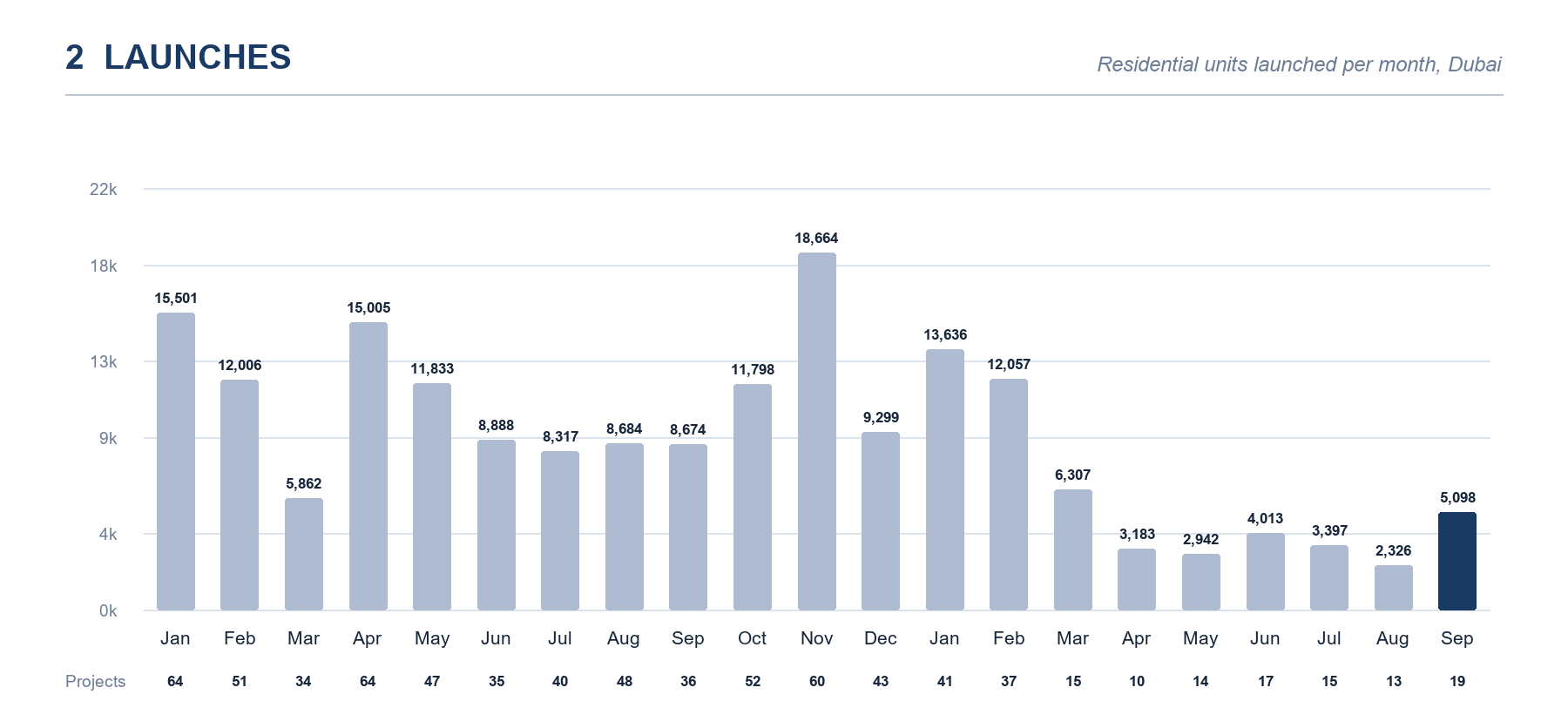
Figure 2. Monthly residential launches in Dubai, January 2025 to September 2026.
3- Completions remain uneven
Dubai completed 4,953 residential units in September, 22% more than in August and nearly four times the September 2025 total of 1,290 units. The September increase extended the recovery from 3,913 units in July and 4,066 in August.
From January to September 2026, developers completed 40,489 residential units, 37% more than during the same period of 2025. Monthly delivery remained uneven: completions exceeded 5,000 units in April and June, fell to 3,913 in July, edged up to 4,066 in August and reached 4,953 in September. Approvals, infrastructure connections and handover sequencing can move large projects between months, so the cumulative total provides the clearer measure of delivery.
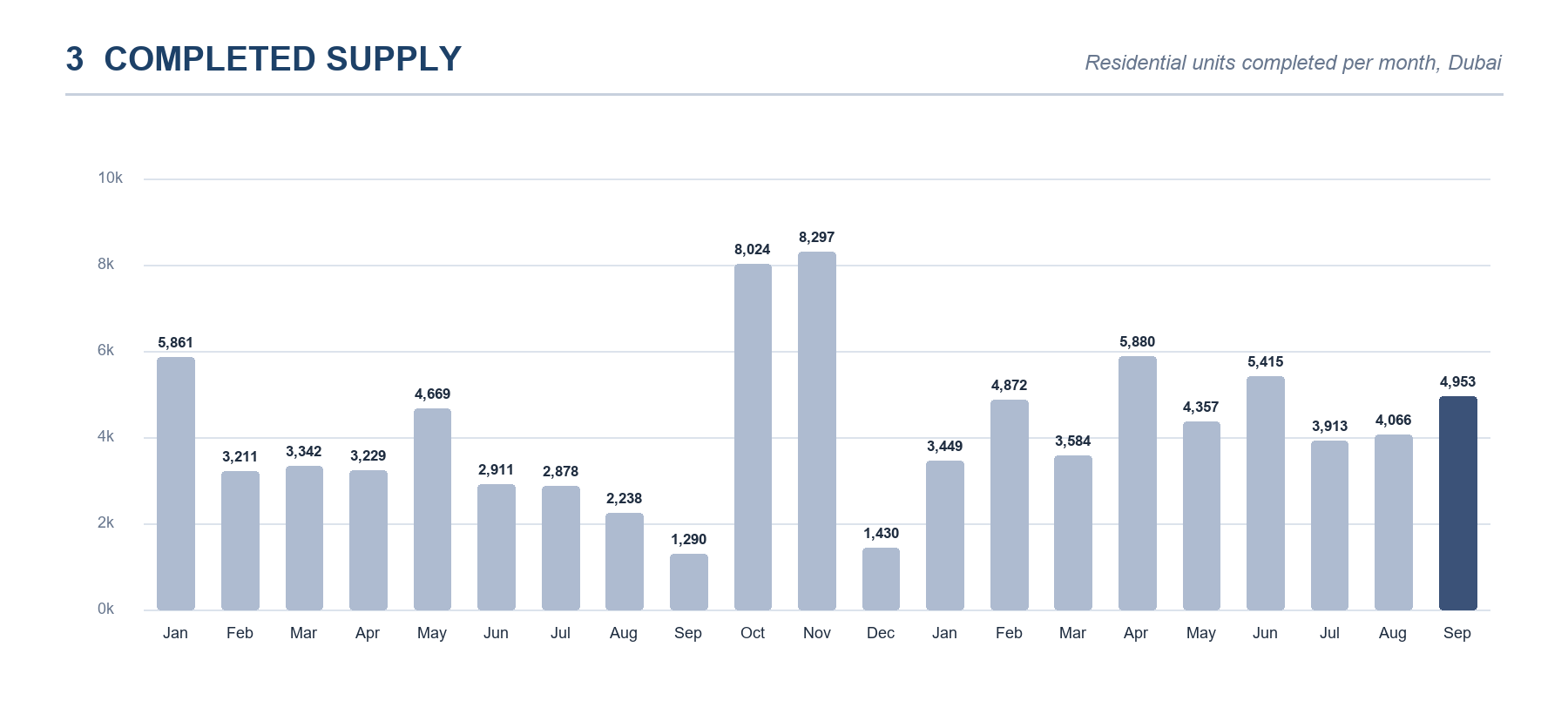
Figure 3. Residential units completed per month in Dubai, January 2025 to September 2026.
4- Upcoming supply is now the market test
The under construction pipeline remains large after excluding projects classified as under planning or on hold. Based on current due dates, 58,581 residential units are scheduled for completion in the final quarter of 2026. A further 225,389 units are due during 2027, including more than 70,000 in both the third and fourth quarters.
Approximately 213,000 residential units are due between October 2026 and September 2027, and roughly 284,000 are due by the end of 2027. The under construction pipeline scheduled through 2029 totals approximately 496,000 units. Due dates may change, but delivery of even part of this pipeline would increase competition among landlords and developers.
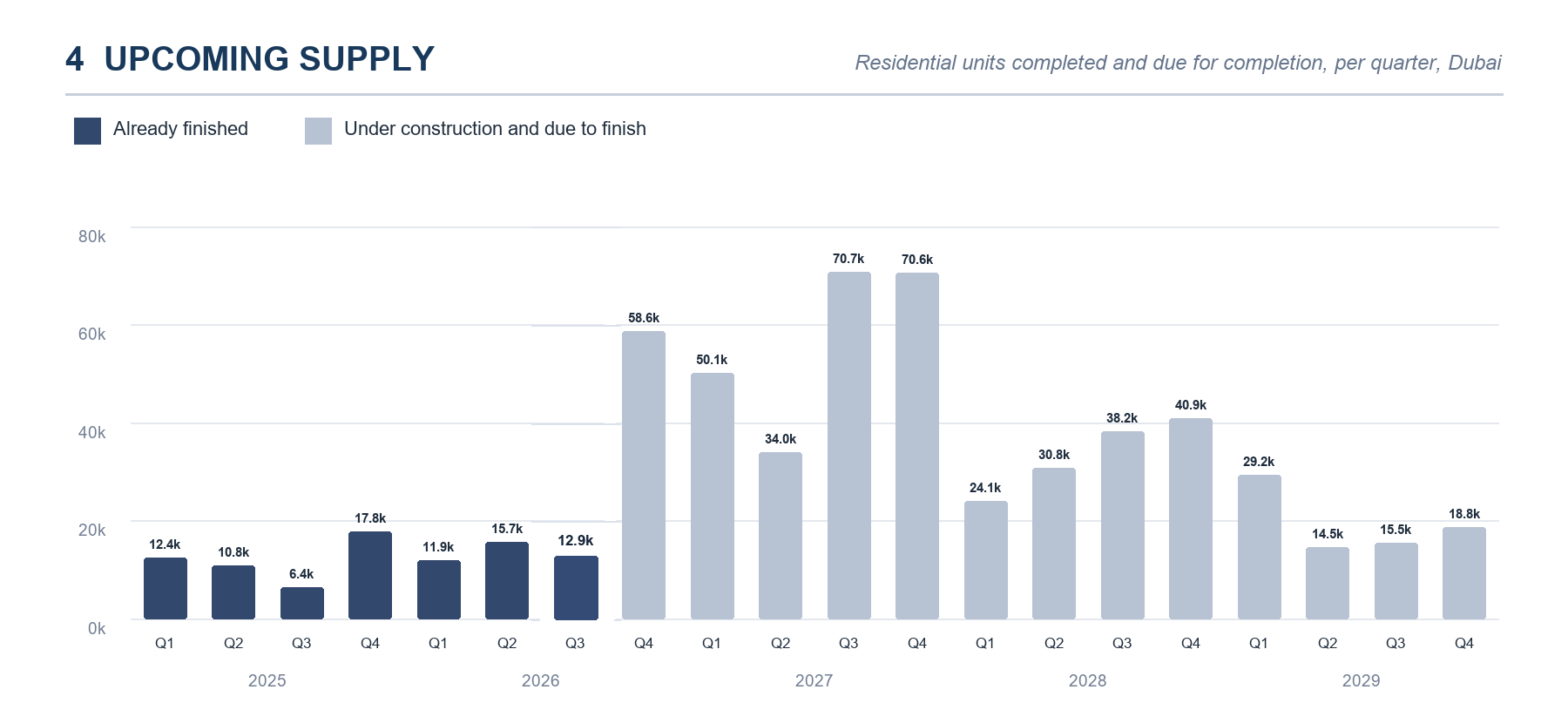
Figure 4. Completed and upcoming residential supply.
5- Three signals will shape the next phase
The first signal is whether launch activity settles at its recent level or begins to recover. From May to September 2026, developers launched between 2,326 and 5,098 residential units a month. A sustained rise would show that developers are returning to expansion; continued restraint would keep attention on selling and delivering existing projects.
The larger immediate test is delivery. Based on stated due dates, 58,581 residential units are scheduled for completion in the fourth quarter of 2026 and another 225,389 during 2027. If these schedules hold, buyers and tenants will have more choice. If large volumes move into later quarters, the effect on available supply will be delayed.
The final measure is the gap between launches and completions. Developers launched 52,959 residential units from January to September 2026 and completed 40,489. If completions move above launches, the existing pipeline will convert into available stock faster than it is replenished. That would confirm the market’s shift from launches towards delivery.