
UAE leads the MEA region’s workspace evolution with strong fundamentals reflected in healthy occupancy rates of 75%-85% in Dubai and 70%-85% in Abu Dhabi
In Dubai, around 55% of the current supply was delivered between 2022 and early 2026, reflecting sustained operator confidence, while Abu Dhabi’s growth is fuelled by the highest rate (60%-70%) of new business enquiries in the MEA market
The Middle East and Africa (MEA) flexible workspace market has reached a critical inflection point, according to a new report by JLL, which finds that over 90% of the region’s corporate real estate portfolios remain committed to traditional, long-term leases.
The report titled ‘Middle East & Africa Flexible Workspace Market Report 2026’ calls for an urgent rethink of how commercial real estate stakeholders approach workspace strategy. This is because artificial intelligence and evolving workplace models are creating fundamental uncertainty regarding optimal workforce composition and spatial requirements, making portfolio agility a strategic imperative. Yet, the adoption gap remains stark as fewer than 5% of global corporations allocate more than 10% of their portfolios to flex space, while more than 40% allocate one per cent or less.
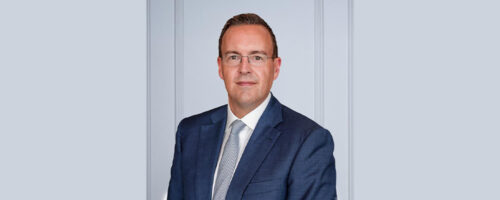
Dana Williamson, Head of Offices, Business Space & Retail – MEA at JLL, said: “The flex office sector is evolving, and the combination of a ready, financially stable supply and a growing demand for agility amid AI and evolving business requirements has created a defining moment for the industry. This shift creates opportunities for investors to participate in high-growth segments and for operators to build on compelling returns. As it becomes increasingly difficult for CEOs to predict what effective working habits will look like in three to five years, for corporate occupiers, flexibility becomes a core strategic tool for mitigating risk. How quickly and at what scale they position for this inevitable shift will be key to securing a competitive advantage.”
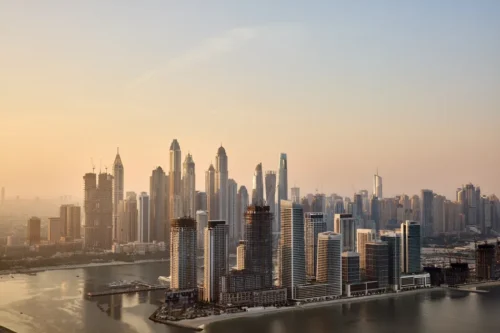
The report underscores the UAE’s role as the region’s most advanced flexible workspace market, with Dubai leading as its largest and most mature hub. Commanding over 1.2 million sq. ft. of supply with a healthy 75% – 85% occupancy rate, the emirate has seen sustained operator confidence, with approximately 55% of its current inventory delivered since 2022.
Dubai’s key advantage is its diversified landscape. Unlike other cities, its multiple submarket tiers, from the premium Central Business District (CBD) to value-focused hubs like JLT, create unparalleled tenant choice and support competitive pricing, enabling market segmentation strategies. Private offices dominate the Dubai flex landscape, with approximately 95% of workspace allocated to enclosed offices in the CBD locations to meet the regulatory and confidentiality needs of financial and professional services firms.
The market’s long-term stability is anchored by its diverse tenant composition of approximately 55% regional/local and 40%-45% international occupiers, with demand spanning new setups, expansions, and strategic relocations. This inherent resilience was demonstrated recently when operators responded to softer absorption from geopolitical tensions by offering tenant incentives and flexible lease structures to preserve pricing integrity, instead of offering substantial rental rate reductions.
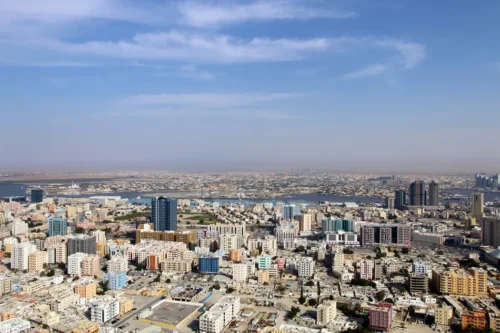
In contrast, Abu Dhabi’s supply of 366,000 sq. ft. reflects a measured and strategically concentrated development. The capital is in a growth acceleration phase, transitioning from a niche market to a scaled flex ecosystem following significant supply additions in 2024 and 2025. The city enjoys a strong 70%-85% market-wide occupancy rate.
The market’s structure is defined by its ADGM concentration, which captures 57% of operator presence, reflecting Abu Dhabi’s focus on developing a singular financial hub within a specialised regulatory framework. This concentration creates favourable conditions for established operators and serves a tenant base overwhelmingly driven by new businesses.
Demand in Abu Dhabi is the highest across all MEA markets for new company setups, which account for 60%-70% of enquiries. This demand is increasingly international (45%-55%), signalling the capital’s growing global integration.
The JLL report notes that this market evolution validates the structural shift toward flexibility as a permanent corporate workspace strategy, with operators now enhancing meeting capacity and investing in technology to support hybrid work models. In increasingly competitive markets, the differentiation is centred on service excellence, with hospitality-oriented models and superior design quality becoming key to justifying premium positioning.
These market dynamics create distinct opportunities for all stakeholders. Landlords and developers must prioritise partnership structures over direct operations. Management agreements and revenue-share models further protect landlords from operator defaults, maintaining asset control and participation in flexible office revenue streams.
Operators must choose between premium differentiation and volume-based models. While the premium route demands rigorous operational consistency to build competitive barriers through prime locations, superior design, and hospitality-driven service, volume-based strategies focus on accessible pricing and broad geographic reach, trading lower margins for economies of scale. Corporate occupiers are urged to evolve beyond binary traditional-versus-flexible decisions toward an optimised allocation that leverages the distinct advantages of each model.
The MEA flexible office sector is now financially stable, operationally disciplined, and positioned for sustained growth. The transition from a niche accommodation solution to strategic real estate infrastructure will provide the speed, agility, and adaptability that modern business requires in an era of unprecedented workforce uncertainty.
Source: Zawya