Expert views on how to Dubai-it the property market
Editorial Feature By Tariq Ramadan, Editor-in-Chief
In this compelling featured report underpinned by proprietary insights from our strategic data and market intelligence partners, REIDIN, we explore how Dubai has consistently transformed challenges into catalysts for growth. The city’s evolution from earlier cycles has been marked by greater resilience, adaptability, and an increasingly competitive global positioning.
This edition also brings together perspectives from leading property executives, offering targeted insights for policymakers and key stakeholders. At its core, the discussion centers on actionable strategies designed to reinforce Dubai’s standing as a premier global real estate hub.
Crucially, our analysis examines how lessons from past cycles, when combined with forward-thinking innovation, can be leveraged to shape a more sustainable, resilient, and future-ready property market.
Historical Overview – Past crisis rebounds are a clear indication of a strong bounce back for the market:
According to REIDIN’s report – featured in the Market insights section of this edition – four cycles of data show a market that does not just bounce back. It returns deeper, broader and better financed each time. A look at where Dubai has been, and what the next phase of growth demands.
Dubai’s residential market has now lived through four distinct chapters, and REIDIN’s historical indices let us read them as one continuous story rather than a sequence of unrelated events. Citywide average sales prices climbed from roughly AED 500 per square foot in 2003 to a 2008 peak near AED 1,234, corrected sharply through the global financial crisis to a 2011 low around AED 843, then built a second peak of about AED 1,437 in 2014.
The post-2014 cooling and the COVID trough of 2020, when average prices eased to roughly AED 1,025, completed the pattern. What follows is the most important part: each correction bottomed at a higher floor than fear suggested, and each recovery carried prices to a new high. The 2025 average near AED 1,827 stands well above every previous peak, and 2026 has pushed higher still, to roughly AED 1,915 year-to-date. April 2026’s 1.76% monthly softening, the sharpest since October 2015, is real, but it follows the strongest run in the market’s history and sits on a far more mature base.
Prices tell only half the story; activity tells the rest. Residential sales volumes fell to roughly 32,000 deals in the 2020 disruption, worth around AED 54 billion. By 2025 the market recorded approximately 206,000 sales worth close to AED 548 billion, a six-fold increase in volume and a ten-fold increase in value in just five years. That momentum has carried into 2026, with roughly 76,000 sales worth about AED 214 billion already recorded in the opening months of the year. Crucially, the rebound after each shock has rebuilt the market larger than before, not merely restored it.
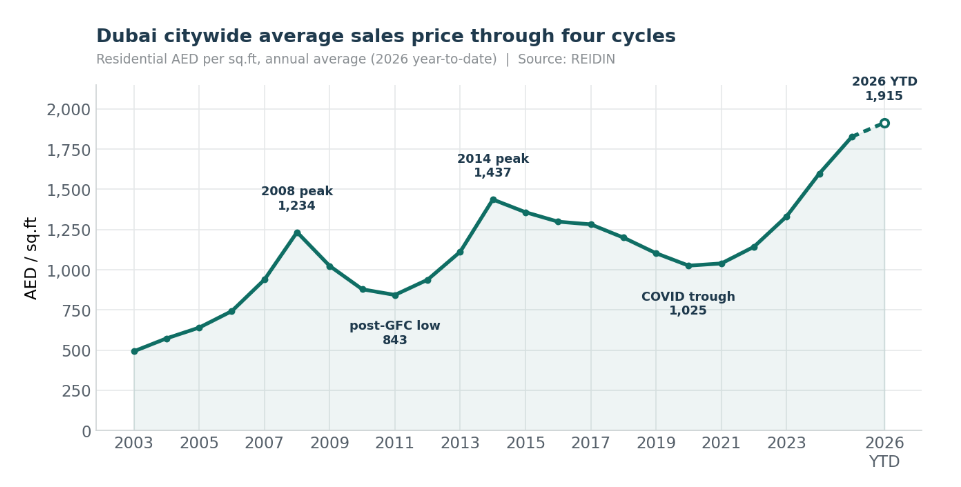
REIDIN – Figure 1. Citywide average residential sales price, 2003 to 2026 (YTD). Every cycle has ended higher than the last.
Expert views on how to re-imagine the property market
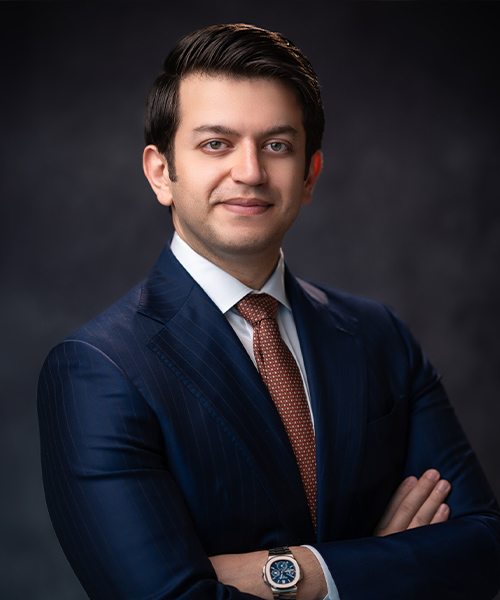
Mr. Masih Imtiaz, CEO of Imtiaz Developments highlighting the enduring strength of Dubai’s real estate sector aid: “Dubai’s property market continues to prove that confidence, innovation, and resilience drive long-term success. At Imtiaz Developments, Raw District by Imtiaz is a strong example of this belief. The AED 2 billion project sold out on launch day because we trusted the Dubai market and introduced an innovative concept aligned with evolving investor and lifestyle needs. After periods of regional uncertainty, the focus must remain on sustainable development, investor transparency, and bold ideas. By working closely with policymakers and key stakeholders, Dubai will continue to strengthen its position as a global real estate leader.”
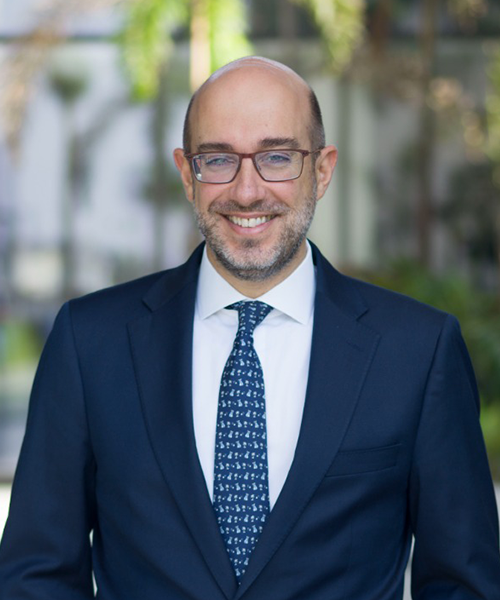
Building on this perspective, Mr. Miltos Bossinis, CEO of H&H reflected on the broader market evolution and its increasing sophistication. “Dubai’s property market has evolved significantly over the past two decades, reflecting remarkable resilience and adaptability. One of the key lessons from this journey is that long-term value is created when developments are designed around people, not market cycles. As the sector matures, we are seeing greater demand for integrated communities, mixed-use destinations, and environments that prioritise quality, wellbeing and connectivity. The future of growth will be shaped by developments that focus on long-term liveability and enduring relevance. At H&H, we are committed to creating a genuine sense of place and delivering timeless developments that enrich the lives of residents and communities for generations to come. We believe this approach will define the future of Dubai’s real estate landscape.”
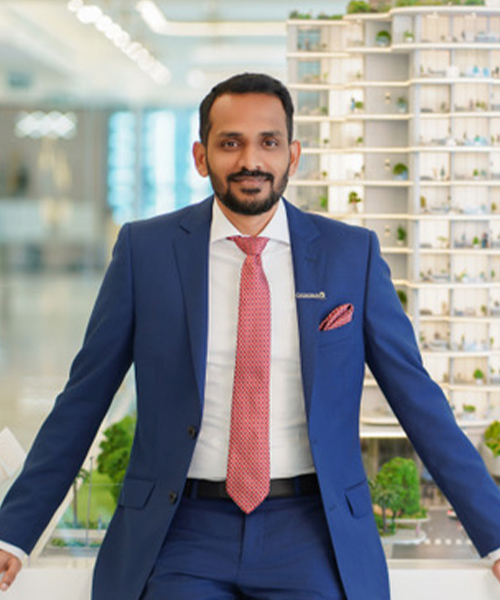
Extending this narrative, Mr. Luthfullah K, Director, at Casagrand provided further insight into how resilience translates into opportunity at scale. “Dubai’s greatest strength is that it consistently turns challenges into opportunities for reinvention. As an experienced developer with over 22 years of excellence in real estate development, entering the UAE market, we have seen firsthand how investor confidence continues to be supported by transparent regulation, strong governance, and long-term vision. At Casagrand, we believe the next phase of growth will be defined by quality, delivery credibility, and creating genuine end-user value. The real opportunity now is to build on the foundations that have made Dubai a global real estate success story. By continuing to invest in infrastructure, embrace innovation, and support a transparent, investor-friendly environment, the market can remain resilient and well-positioned for sustainable long-term growth.”
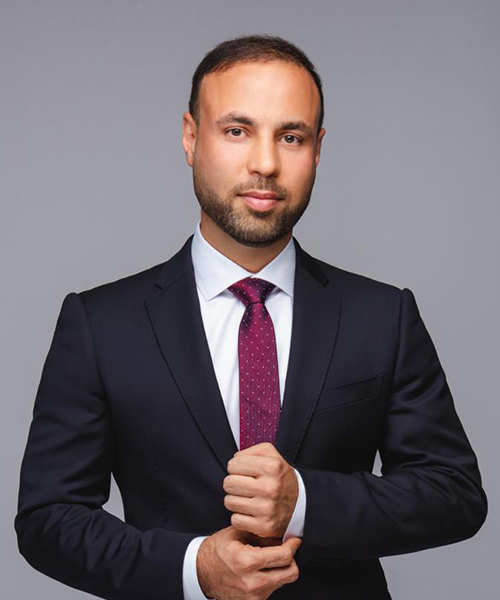
Reinforcing this theme, Mr. Farhad Azizi, Group CEO – Azizi Group emphasized the importance of learning from past cycles while maintaining forward momentum. “Dubai has repeatedly turned adversity into advantage, emerging from each cycle more mature and globally competitive. The lesson is clear: discipline and vision must guide growth. My recommendations are straightforward. Align supply with real demand, broaden strength across residential, commercial, hospitality, industrial, and retail, and invest in sustainability and smart infrastructure today. Policymakers and developers share responsibility for transparency and long-term thinking. Azizi remains committed to delivering landmark projects that reflect this ambition. Dubai’s property market is not just recovering its momentum; it is redefining what a world-class real estate hub can be.”
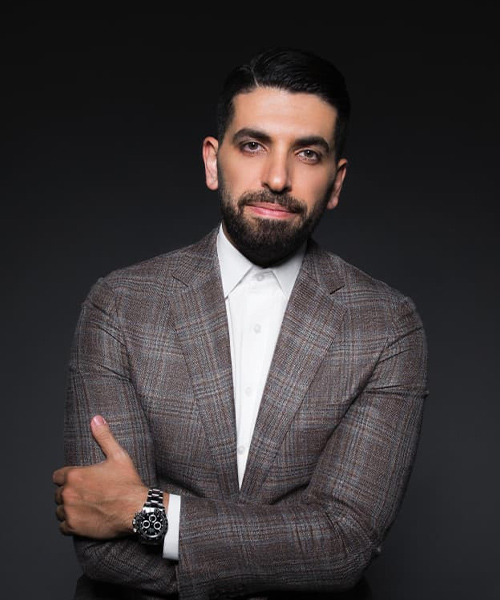
Adding to the discussion, Dr. Mohanad Alwadiya, CEO, Harbor Real Estate tied these insights together by underscoring the human dimension behind market resilience. “In times of adversity, the true character of people and nations is revealed. Dubai has consistently demonstrated the truth of this statement. The emirate’s property market has repeatedly shown that resilience is not simply about recovering from challenges; it is about emerging stronger, smarter, and more competitive. The lessons learned from previous market cycles have reinforced the importance of transparency, innovation, regulatory agility, and sustainable urban planning. To maintain Dubai’s position as a global real estate leader, we must continue embracing data-driven decision-making, encouraging responsible development, and strengthening collaboration between policymakers, regulators, master developers, and industry stakeholders. By focusing on long-term value creation across all asset classes, Dubai will further solidify its reputation as one of the world’s most resilient, innovative, and future-ready real estate markets.”
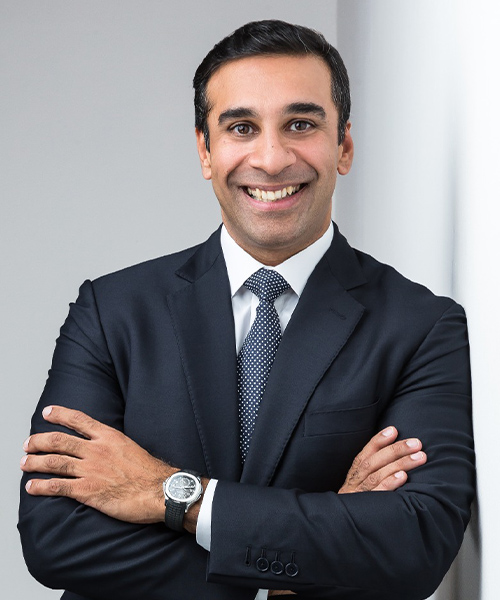
Adding a strategic investment perspective, Mr. Imran A. Sheikh, Chairman & CEO of BlackOak Global said “Crisis has a way of revealing strength. History shows it repeatedly. The hardest moments force any market, institution or country to assess honestly, adapt, and come back better. I have watched Dubai do exactly that, more than once. As an institution working across most real estate asset classes, we have learned that resilience is not luck but discipline. My recommendation to policymakers and master developers is to apply those lessons now. Phase delivery to demand, reward quality and sustainability, deepen transparency, and keep widening the door to long-term global capital. That is how a strong market becomes a lasting one.”
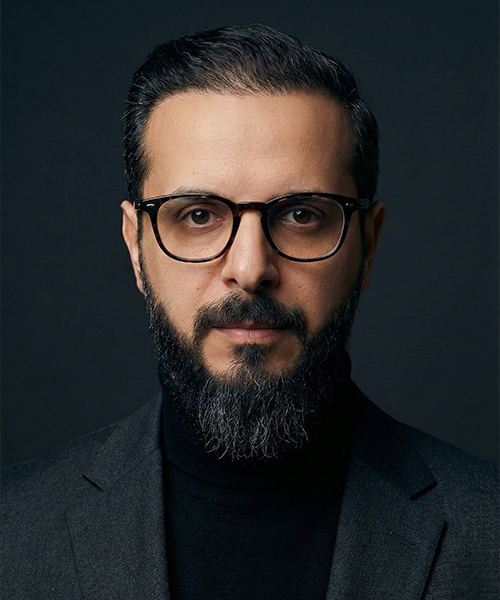
Concluding these valuable expert insights, Real Estate Investment Expert Mr. Mohammed Alhaj said: “Crises Are Classrooms… and Real Estate Is the First to Learn. Every global crisis has redrawn the real estate map. After 2008, a more disciplined financing system emerged. After COVID-19, flexible spaces and smart real estate solutions took the lead. Today, the impact of conflicts presents a real opportunity to reimagine the sector through a different lens. Decision-makers must adopt flexible regulations that can absorb shocks, while developers should invest in geographic and functional diversification. Investors, in turn, need to reassess risk with a more scientific approach. Real estate is not defeated by crises; it evolves when we learn from the past correctly.”
Editor’s Perspective: Steering Dubai’s Property Market Toward Sustainable Growth
As Dubai’s property market continues its impressive trajectory, the role of policymakers has never been more critical. The emirate has firmly positioned itself as a global real estate powerhouse, yet maintaining this momentum will require a forward-looking, balanced, and highly coordinated regulatory approach. Here are some points policymakers can consider:
- To sustain long-term growth, Dubai must continue evolving beyond traditional development models. Embracing open land opportunities and nurturing new mechanisms will be essential, not only to attract global investment but also to ensure the market remains dynamic, resilient, and competitive. Equally important is the need to prioritize the end-user experience, ensuring that development aligns with real demand rather than speculative cycles.
- A key priority lies in strengthening collaboration between government authorities and major developers. By fostering a unified ecosystem, policymakers can ensure that supply is strategically aligned with market needs. This includes implementing agile demand-management tools – such as adjusting transfer fees in response to market cycles – to stabilize fluctuations and maintain equilibrium.
- While escrow regulations have played a vital role in safeguarding project delivery, broader regional dynamics may introduce unforeseen challenges. Developers should therefore be empowered with flexible regulatory frameworks that allow for project restructuring where necessary. This will enable continued progress without compromising investor confidence or market integrity.
- Transparency must also remain at the core of Dubai’s real estate evolution. Developers should be encouraged to provide clear, accessible insights into project progress, fostering trust and enabling investors to make informed decisions. At the same time, adopting global best practices – from mortgage frameworks to construction timelines -will further reinforce Dubai’s position as a benchmark for excellence.
- From a branding standpoint, a unified narrative is essential. Initiatives such as “Live in Dubai,” “Invest in Dubai,” and “Make in Dubai” should be complemented by a strong real estate identity – one that positions the city as a premier global destination for both lifestyle and investment.
- Investor engagement is another critical pillar. Expanding international roadshows, forming strategic global alliances, and showcasing developments on prominent platforms will ensure Dubai remains top-of-mind for international capital. Alongside this, developers must adopt a more customer-centric approach addressing investor concerns proactively and maintaining consistent, transparent communication.
- Equally, enhancing data-driven decision-making will be key. Policymakers should prioritize advanced analytics and AI integration to better understand market trends, enabling smarter planning and more responsive regulation.
- Innovation must also extend to the startup ecosystem. Supporting proptech ventures through funding initiatives beyond incubation programs will drive efficiency, unlock new value streams, and future-proof the sector.
- At the operational level, stronger collaboration between master developers and sub-developers is essential to maintain market health. Clear guidelines, fair practices, and mutual accountability will ensure a balanced and competitive environment.
- Finally, strict enforcement of project completion quality standards is non-negotiable. Eliminating delays and ensuring that developments are delivered as promised will reinforce buyer confidence and uphold Dubai’s reputation for reliability. Smarter construction regulations backed by rigorous financial reviews and quality controls will further enhance market stability and sustainability.
In essence, Dubai’s real estate market stands at a pivotal moment. With the right mix of innovation, regulation, and global positioning, it is poised not only to grow – but to set new international standards for excellence.
Conclusion
In conclusion, Dubai’s property market stands as a case study in disciplined evolution. Its resilience is not incidental but systematically built through experience, regulation, and innovation. Historical performance clearly demonstrates that each cycle has not only restored market confidence but elevated it creating a deeper, more liquid, and better-structured ecosystem. The insights shared by industry leaders consistently reinforce a common thesis: sustainable growth will be driven by quality development, transparency, and a sharp alignment between supply and genuine end-user demand.
Looking ahead, the market’s next phase will depend on how effectively stakeholders translate these lessons into action. Policymakers must continue refining the regulatory framework, while developers prioritize long-term liveability, integrated communities, and delivery credibility. At the same time, strengthening investor trust through data transparency, governance, and global engagement will remain essential to sustaining capital inflows.
Dubai is no longer simply responding to market cycles, it is actively redefining them. With a coordinated approach that balances innovation, infrastructure investment, and strategic oversight, the emirate is well-positioned to transition from a high-growth market into a benchmark for global real estate excellence. The opportunity now is not just to grow, but to lead with consistency, maturity, and vision.