

By Tariq Ramadan
Celebrating yet another record year for Dubai’s property market in 2025 many questions are arising about the outlook of the market taking into consideration the number of projects introduced in past two years leading to large supply of units, and at the same time, government initiatives targeting 5.8 million in population by 2040 – Up from 4 million in 2024.
While some experts are projecting more normalized market growth, other experts are more optimistic about the market performance sighting a long history of delays in project delivery which will spread supply over more years allowing demand to catch up, especially in mature areas with limited supply.
In this report we explore expert opinions on Dubai’s property market outlook to decide what market cycle are we at or are the new prices and new reality for the market
A recent report by leading research company REIDIN Looks ahead to 2026 and 2027, as the market narrative shifts meaningfully. While the current cycle has been driven primarily by off-plan activity, future performance will increasingly depend on job creation translating into sustained population growth and end-user absorption. Importantly, a substantial volume of supply launched between 2023 and 2025is scheduled for delivery over the next two years. Around 397,000 residential units are expected to be completed through 2028, with nearly 70% concentrated in 2026–2027, introducing a clear inflection point for supply dynamics.
This upcoming delivery wave is expected to place pressure on price growth, particularly in high-volume apartment corridors where competing projects overlap. However, this should not be interpreted as a uniform market correction. Delivery remains geographically concentrated, developers retain flexibility in phasing, and demand depth varies materially by location and price band.

Mr. Ozan Demir
Director – Operations & Research at REIDIN said: “While some market commentators express concerns around a renewed supply-led downturn, the data points toward normalisation rather than oversupply. The next phase of the cycle will be defined less by headline launch volumes and more by execution quality, pricing discipline, and the ability of locations to absorb delivered stock. As Dubai moves into 2026–2027, differentiation across assets and communities will widen, with demand-led, liveable, and well-located projects outperforming purely volume-driven supply”.

Mr. Rizwan Sajan
Founder and Chairman of Danube Group said, “Dubai’s property market is strong and continues to attract buyers from around the world. The growth we are seeing is not just short-term – it shows steady demand, strong interest from international investors, and clear regulations that give people confidence to invest for the long term. In addition to world-class infrastructure, an enhanced lifestyle offering, quality healthcare, a strong education system, and favorable tax policies, affordability remains one of Dubai’s key attractions. Compared to other major global cities, Dubai stands out as a highly attractive destination for both end-users and investors alike. Combined with our signature 1% per month payment plan, fully furnished apartments, and ahead-of-schedule project delivery, we position ourselves as a one-stop destination for real estate in Dubai. I remain optimistic about the opportunities ahead – not only through 2026, but for many years to come.”
Another report by Cavendish Maxwell on the defining characteristic of the UAE residential property market in 2026 is that demand dynamics are expected to differ significantly, marking a departure from the more uniform growth seen in 2025.
Each emirate will have its own unique drivers and trends shaping demand. Dubai is expected to see the most pronounced shift, with around 108,000 units scheduled for delivery in 2026, and early indications suggest that sales prices and rental growth are moderating.
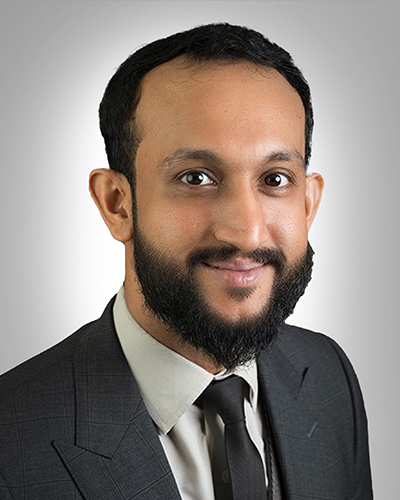
Mr. Ali Siddiqui
Research Manager at Cavendish Maxwell said: “Looking ahead, near-term demand is expected to remain solid, supported by population growth and the continued influx of new companies, which in turns creates job opportunities and the need for more accommodation.
As a result, sales prices and rental rates are likely to continue rising, but the pace of growth will vary across emirates and between communities within each emirate”.

Mr. Ronan Arthur
MRICS, Director, Head of Residential Valuation at Cavendish Maxwell said: “After another record-breaking year, Dubai’s residential market is beginning to show signs of normalisation, with rising supply and slowing price growth pointing towards more balanced conditions in 2026.
Performance will increasingly depend on absorption rates, buyer sentiment and the market’s ability to digest upcoming completions.”
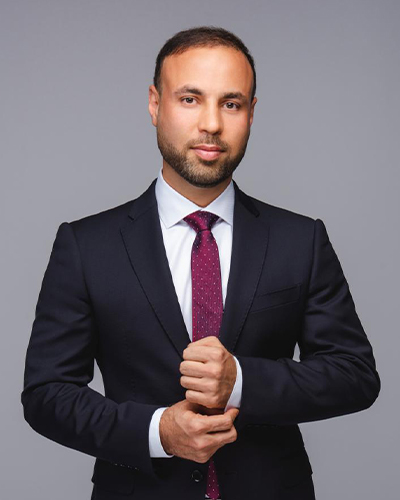
Mr . Farhad Azizi
Group CEO of Azizi Group, added:
“We see the market continuing on its strong momentum, with demand now increasingly driven by underlying fundamentals and end-user and long-term investor requirements, rather than short-term speculation. This shift is reflected in healthier absorption rates, more disciplined leverage, longer holding horizons, and a growing share of transactions supported by genuine occupancy and yield considerations — all clear indicators of a maturing market cycle.
While minor price adjustments may occur in select segments or micro-markets over the course of the year, any such corrections are likely to be limited and short-lived. Structurally, Dubai’s real estate offering remains compelling relative to other global metropolitan centres, underpinned by a favourable tax environment, strong population and employment growth, world-class infrastructure, regulatory transparency, and pricing that continues to offer a meaningful discount on a price-per-square-foot basis, while delivering superior net yields. These fundamentals provide resilience and long-term support for the market.”
A report by Knight Frank showed that the registered projects pipeline, as tracked by Knight Frank suggests an influx of inventory in 2026. Indeed, over 160,000 units could enter the market this year.
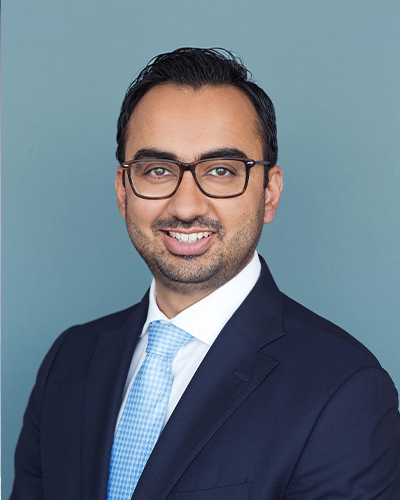
However, according to Mr. Shehzad Jamal, Partner – Real Estate Consultancy, MENA at Knight Frank,
“When it comes to new housing supply, the reality is that the completion rate is likely to be far lower than what the data suggests. Developers have been unable to meet completion obligations throughout this property cycle, with the total proportion of homes completed on time last year improved to 64% in 2025 of 39,700 units, which is just-above the long-term delivery rate of 36,000 homes per year over the last 20 years. This follows a 50% completion rate in 2024 of just 30,500 units,”.Mr. Shehzad Jamal,
Partner – Real Estate Consultancy, MENA
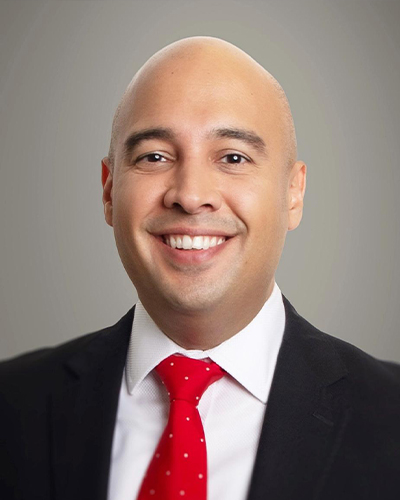
Mr. Faisal Durrani
Partner – Head of Research, MENA at KNight Frank, said: “We expect to see an overall moderation in the pace of house price growth as supply increases and the natural progression of the property cycle plays out. However, the structural drivers of demand in Dubai – population expansion, wealth migration and economic diversification – remain firmly intact. While the rate of house price growth may be demonstrating signs of slowing, crucially it remains positive, underpinned by robust international HNWI demand for premium homes, continued inflows of global wealth and a deepening pool of resident investors. Overall, our expectation for 2026 is for price rises of around 3% in the prime segment, while the growth in the mainstream market is likely to average around 1% by the time we get to the end of December 2026.”
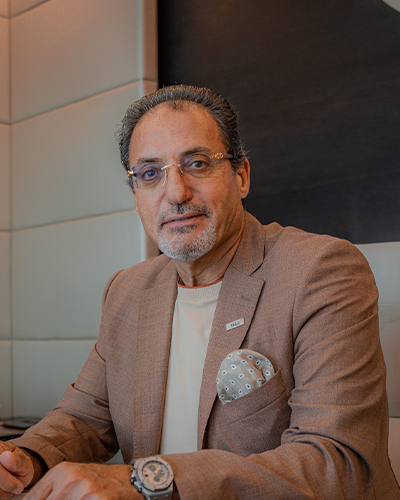
IMr. Moafaq Al Gaddah
Chairman of MAG Group Holding – shared his view on Dubai’s market outlook by saying: “Over the coming three years, we expect Dubai’s real estate market to maintain a strong and stable growth trajectory, supported by population growth, tourism, and the UAE’s broader economic vision.
Key trends shaping the sector will include sustainability, wellness-focused design, smart technology integration, and community-driven developments. Developers who prioritize quality, authenticity, and long-term value creation will be best positioned to succeed”
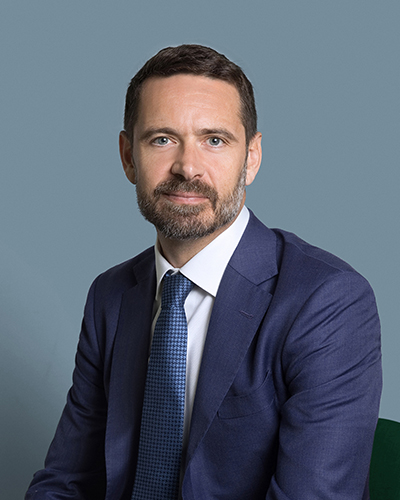
Mr. Matthew Green,
Head of Research at CBRE MENA
added: “The UAE Real Estate market continues to demonstrate remarkable resilience across all major sectors.
Demand fundamentals remain exceptionally strong, supported by ongoing economic diversification, robust population growth, and rising investor confidence. Supply constraints are a common theme across office, industrial, and select residential sub‑markets, and this imbalance will continue to shape performance through 2026.”